
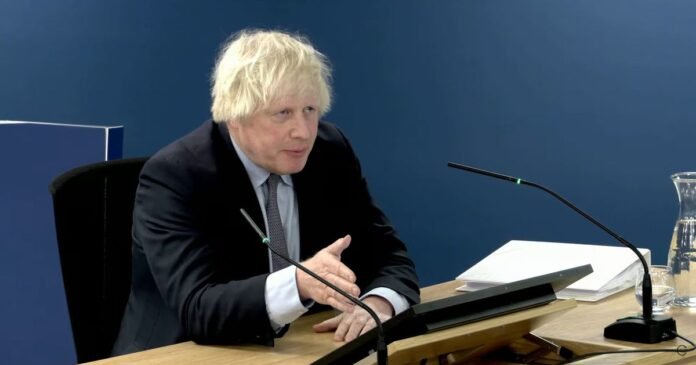
Boris Johnson is set to face inquiries at the Covid-19 Inquiry this week regarding the negative impact on a generation of children. The former Prime Minister has faced criticism for delays in implementing lockdown measures and inadequate national preparation for remote learning when schools were shut down. There is growing evidence suggesting that the disruptions in education and isolation during the pandemic have had lasting consequences for some children.
Protesters and individuals affected by Covid are anticipated to attend as the embattled leader addresses his government’s decisions on Tuesday in the latest phase of the inquiry focusing on children and youth. During a previous session in 2023, Mr. Johnson acknowledged that children, especially those from lower-income families, were disproportionately affected by his administration’s pandemic responses.
In response to questions about school closures and lockdowns, Mr. Johnson expressed uncertainty about following the same approach in the future. He indicated regret that more resources were not allocated to help children catch up on their education post-lockdowns.
In March 2020, the UK closed schools for all but the children of essential workers and those identified as most vulnerable. Families were expected to facilitate remote learning, but those with essential workers unavailable at home or inadequate internet access struggled to keep up.
The Children’s Rights Alliance for England revealed that only a small fraction of vulnerable children eligible for in-person schooling during lockdown actually attended. The organization’s director emphasized the long-term impact of decisions made during the pandemic on children and stressed the need for immediate support to address the consequences.
Some families residing in high-rise buildings experienced isolation and lacked access to outdoor spaces during the pandemic. Children in households with parents facing mental health and addiction challenges also endured hardships behind closed doors.
Recent reports from the Mirror highlighted criticism of Mr. Johnson by his former Education Secretary Sir Gavin Williamson during the inquiry at Dorland House in West London. Sir Gavin suggested that the Government’s delays in preparing schools for remote learning and last-minute policy changes were often instigated by the then-Prime Minister.
Sir Gavin also acknowledged numerous errors, including the lack of readiness for school closures and remote learning despite emerging scientific evidence indicating their necessity. Meanwhile, Sir Chris Whitty, England’s Chief Medical Officer, is expected to provide testimony before the inquiry and face questions regarding the advice he provided to government officials.

