
House prices are expected to see slow growth next year following a recent pause, as per experts. Data from the Halifax, a mortgage lender, reveals that average property prices nearly stagnated in November, edging up by just £138 to reach a new record high of £299,894, inching close to the £300,000 milestone.
Economists attribute the sluggish growth to pre-Budget anxiety, but with the possibility of another Bank of England rate cut as soon as this month, they anticipate an uptick in price growth in early 2026.
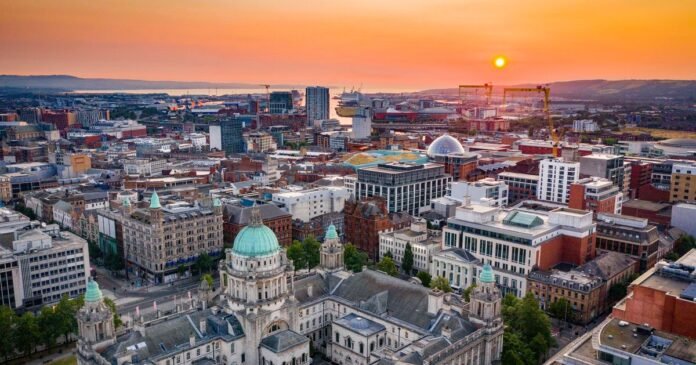
Although national prices have remained relatively flat, certain regions have outperformed others. For instance, Northern Ireland witnessed a significant 9% year-on-year surge in average property prices to £220,716, up from 7.9% in October. The region, with a population exceeding 1.9 million, is grappling with a housing supply shortage, as highlighted in a report by Danske Bank earlier this year.
Conversely, Greater London is still facing challenges, with average prices dropping by 1% to a typical value of £539,766 last month.
Across the UK, the yearly price growth decelerated notably last month, from 1.9% to 0.7%. Amanda Bryden, head of mortgages at the Halifax, noted that this was the weakest growth since March 2024, largely due to the stronger growth seen at the same time the previous year.
Bryden added that despite changes to stamp duty and uncertainties surrounding the autumn Budget, property values have remained stable. While slower growth may disappoint existing homeowners, it is positive news for first-time buyers, as affordability, when compared to average incomes, is currently at its strongest level since late 2015.
Looking forward, Bryden anticipates a gradual increase in property prices throughout 2026, given the steady market activity and expectations of further interest rate reductions.
In November, Scotland registered a 3.7% annual house price growth, with the average property value standing at £216,781. Meanwhile, in Wales, average property values rose by 1.9% year-on-year to reach £229,430. In England, the North West recorded the highest annual growth rate, with property prices increasing by 3.2% yearly to £245,070. London, despite the decline, remains the costliest part of the UK.
Jason Tebb, president of OnTheMarket, acknowledged the housing market’s resilience in 2025, but highlighted significant regional disparities, with the north outperforming the more expensive south due to affordability issues.
Iain McKenzie, chief executive of The Guild of Property Professionals, pointed out that increased housing supply compared to the previous year is moderating price growth in the short term, providing buyers with more options.
Karen Noye, a mortgage expert at wealth manager Quilter, highlighted that post-Budget clarity has given borrowers more visibility for early 2026. Affordability remains a key concern, with mortgage pricing sensitive to shifts in swap rates and global pressures. While fixed rates have decreased, high living costs continue to constrain borrowing power, particularly for first-time buyers.
Sarah Coles, head of personal finance at Hargreaves Lansdown, emphasized the sluggishness in house prices, noting a mere 0.7% increase over the year, lagging behind inflation. She mentioned that uncertainty and economic factors have contributed to the stagnant market, but anticipates a potential improvement in the new year, buoyed by potential rate cuts and falling mortgage rates, which could enhance affordability and stimulate market activity.

