
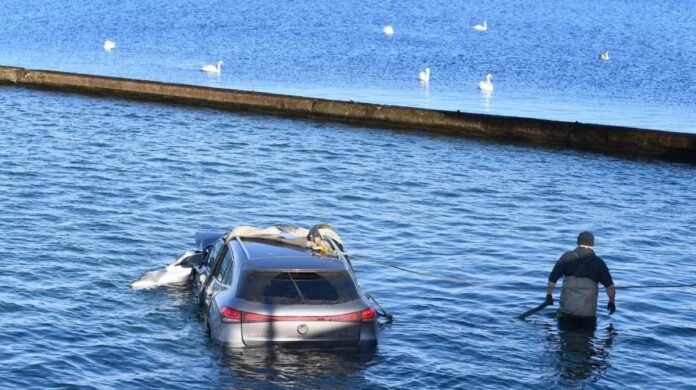
A man involved in a high-speed police chase in Southport claimed that his girlfriend’s car, which he crashed into a historic bandstand and a lake, had been stolen. Harry Mason, 30, led officers on a pursuit reaching speeds of 90mph before causing significant damage to the 120-year-old bus shelter. The incident, which occurred on February 1, unfolded when the police attempted to stop a silver Mercedes being driven erratically by Mason. Instead of complying, Mason accelerated, leading to a dramatic chase captured on police dashcam footage.
The pursuit came to a chaotic end when Mason crashed the car into the bandstand and plunged into the Marine Lake. Following the incident, social media widely circulated images of the submerged vehicle, prompting Mason’s girlfriend to contact Merseyside Police as she recognized her own car.
At the subsequent court hearing, prosecutor Hannah Darling detailed Mason’s reckless driving, emphasizing the dangerous speeds at which he was traveling. Despite initially claiming the car had been stolen, Mason later confessed to being the driver responsible for the destructive crash. He admitted to charges of dangerous driving and perverting the course of justice.
The damage caused to the historic bandstand was estimated at £90,000, leading to concerns about the strain on Sefton Council’s resources. The council’s project manager, Alan Lake, expressed disappointment over the loss to the town’s architectural heritage and the financial implications of repairing the shelter.
During the court proceedings, Mason’s defense attorney, Damian Nolan, highlighted the personal challenges Mason was facing at the time of the incident, including job loss and family pressures. Despite having a previously clean record, Mason received a suspended prison sentence, rehabilitation days, a curfew, and a driving ban.
Judge Denis Watson acknowledged the significant repair costs but hinted at potential civil claims against Mason for restitution. Mason was cautioned that the council might seek compensation for the damages caused to the bandstand.

