
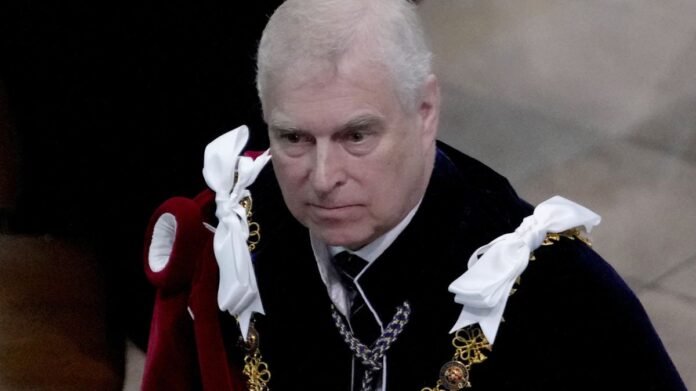
A recent poll indicated that an overwhelming majority, four out of five individuals, are in favor of Prince Andrew being formally stripped of his dukedom. The pressure on Prince Andrew to surrender his Royal Lodge estate has intensified following the release of Virginia Giuffre’s posthumous memoir, with calls for his dukedom removal after he ceased using the title ‘Duke of York.’
The process of formally removing Prince Andrew’s title requires an act of parliament, a step that seems to have substantial backing from the British public. A YouGov survey revealed that 63% of nearly 6,700 surveyed adults strongly support the formal removal of the dukedom, with an additional 17% somewhat in favor, while only 6% opposed the idea.
Prince Andrew has consistently denied the accusations brought against him by Virginia Giuffre. Records show that in 2003, he signed a 75-year lease for the Royal Lodge property, paying £1 million for the lease and a subsequent £7.5 million for refurbishments in 2005. The lease also includes a clause stating that the Crown Estate would compensate Prince Andrew around £558,000 if he were to relinquish the lease prematurely.
Legal experts, such as Lancaster University lecturer Ben Mayfield, suggest that terminating Prince Andrew’s lease early could pose challenges under English law. The matter has prompted discussions among Members of Parliament regarding the Crown Estate’s management of Andrew’s lease.
Dame Meg Hillier, chairwoman of the Treasury Committee, emphasized the need for transparency in cases involving public funds, indicating that parliamentary oversight is crucial in such matters. Downing Street referenced a 2005 National Audit Office report that found no issues with the Royal Lodge arrangements, affirming the appropriateness of the transaction between Prince Andrew and the Crown Estate.

