
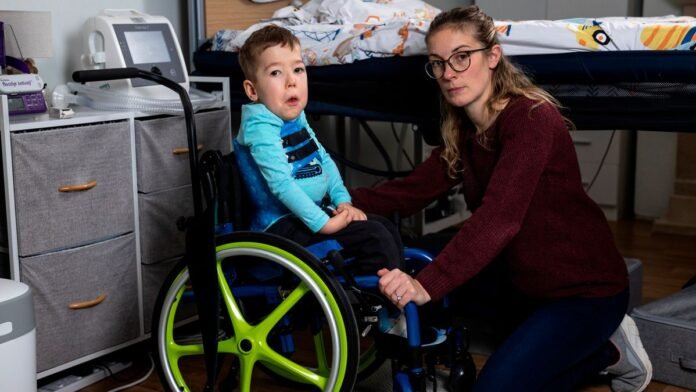
Having a baby can be a stressful and worrisome time for any parent. However, parents of children with spinal muscular atrophy (SMA) often share similar experiences. Many feel devastated by the late diagnosis due to the NHS system’s failures, leading to feelings of guilt.
Initially, these parents bring home what seems like a healthy baby, only to notice concerning changes as time goes on. The baby’s movements decrease, breathing becomes difficult, and feeding poses challenges. Despite voicing their worries to healthcare professionals, they are repeatedly reassured that everything is fine, leading to weight loss, hospital readmissions, and sometimes intensive care due to common infections.
Unfortunately, the NHS often overlooks the key symptoms reported by parents, such as lack of movement and breathing issues. In many cases, parents resort to researching symptoms online and self-diagnosing their child with SMA before alerting healthcare providers, who then confirm the diagnosis through a blood test, albeit after irreversible damage has occurred.
The diagnosis reveals an inherited genetic issue affecting the SMN1 gene, crucial for nerve cell health. Without this gene, motor neurons die off, causing muscle wasting. Treatment options on the NHS can correct the faulty gene or provide a replacement protein, saving the child’s life. However, parents are left grappling with the knowledge that early intervention could have led to a more normal life for their child.
Advocates are pushing for universal screening for SMA in newborns to prevent such late diagnoses and subsequent hardships. The SMA community offers support and understanding, emphasizing the hope and resilience found within these families.
These children, once treated, can lead fulfilling lives, attending school, forming friendships, and bringing joy to those around them. While the future remains uncertain due to the novelty of treatments, these children represent a generation with a chance to survive SMA into adulthood, shaping public awareness and policies regarding rare diseases like SMA.
Celebrity voices and advocacy, like that of pop singer Jesy Nelson, have spurred government action, with Health Secretary Wes Streeting pressing for SMA screening to be included in routine newborn testing. The dedication and courage of SMA parents in campaigning for change have paved the way for a more proactive approach to detecting and managing SMA in infants.

