
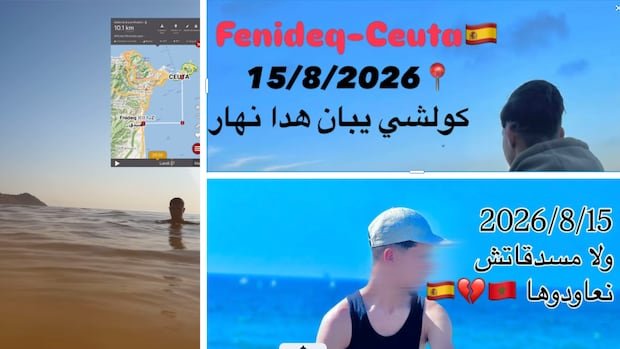
In the days leading up to the recent significant influx of migrants into Europe, a brief video shared on Instagram gained substantial attention with 1.4 million views. The video depicted a young man partially submerged in water, with a map illustrating a sea route from Fnideq, Morocco, to Ceuta, a Spanish enclave. The post suggested a successful arrival in Ceuta.
This video was just one of many viral posts on platforms like Instagram and TikTok that seemed to play a role in organizing two waves of irregular migration from Morocco to Ceuta. These online communities, focused on migration-related content such as music and memes, appeared to exploit the aspirations of African and Middle Eastern youth seeking better opportunities abroad for their own gain.
Diverging opinions exist among governments and organizations regarding whether a single entity orchestrated the events in Ceuta or if migration was manipulated for political purposes. However, it is evident that misinformation, amplified by various online communities, influenced the surge of migrants towards Ceuta this summer.
The surge in social media posts, particularly on Instagram, preceding the initial wave on July 30, was triggered by false information suggesting a change in Spain’s policy towards migrants arriving by sea. Numerous anonymous accounts started promoting the idea of a feasible crossing, resulting in millions of views on their posts. This led to over 72,000 individuals crossing the border on July 30, causing chaos in Ceuta and sparking a crisis in Europe.
While the majority of those who crossed on July 30 have returned to Morocco, around 5,000 remain in Ceuta, with some residing on a beach with assistance from charities. Tragically, nearly 100 people lost their lives attempting the crossing.
The power of misinformation and manipulation to influence real-world events was highlighted by the surge in social media activities observed by the Institute for Strategic Dialogue. Various social media accounts directed followers to WhatsApp chats for planning crossings and shared tips on reaching Ceuta. Additionally, some accounts provided advice directly through their posts.
After the events of July 30, Meta and TikTok collaborated to fact-check posts to prevent criminal exploitation of potential migrants through misinformation. However, another wave of posts emerged ahead of August 15, indicating a new opportunity for entry into Spain. Accounts involved in the July 30 crossing, as well as new ones, were active in promoting this next phase.
The response from Moroccan and Spanish authorities to the August 15 situation was more prepared, resulting in the arrest of hundreds of migrants. The government had warned against social media posts encouraging the crossing and took action against those responsible. Several Instagram accounts linked to the July 30 events have since been shut down.
The surge in online activity was fueled by successful migration attempts to Ceuta before the recent events. Ceuta had become a popular entry point into Spain, attracting thousands of individuals seeking a better future. While social media played a role in shaping the narrative, the desire to migrate was intrinsic and not solely driven by online content.
Many of the accounts involved in promoting migration appeared to reflect the disillusionment and desperation prevalent among young people in North Africa, using imagery and rhetoric that glorify migration. The surge of migration-related messages resonated with individuals facing high unemployment rates and limited opportunities in their home countries.
Accounts originating from North African countries, including Morocco and Algeria, as well as Italy and Turkey, enticed individuals with vague promises of reaching Europe without explicitly offering a means to do so. The allure of migration was further perpetuated by aspirational messages and images shared on social media.
Influencer-style accounts with themes of departure and migration garnered a significant following, with posts featuring individuals in wetsuits alluding to the journey from Fnideq to Ceuta. Efforts to reach out to accounts associated with the July 30 and August 15 events yielded no responses.

