
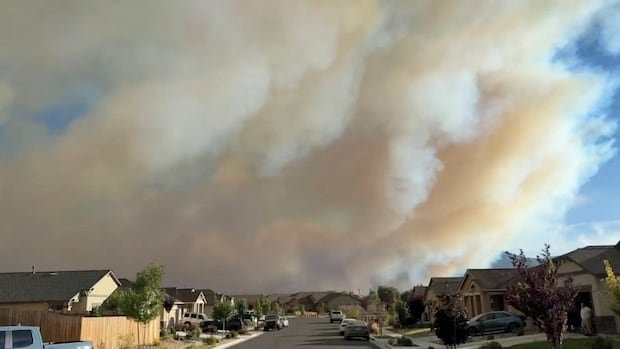
A rapidly spreading wildfire in northwest Reno, Nevada, caused chaos as it destroyed homes and hindered firefighting efforts by jumping over fire trucks. The blaze, named the Hawk Fire, erupted on Saturday and quickly expanded to over 60 square kilometers in the Peavine Peak area of the Humboldt–Toiyabe National Forest.
Shifting winds posed challenges for firefighters attempting to contain the fire, prompting authorities to issue evacuation orders for approximately 90,000 individuals. The fire, deemed “human-caused,” resulted in injuries to six people, including three first responders and three civilians. However, the specific cause of the fire remained undisclosed.
As the fire encroached on residential areas near the California state line, around 42,000 residents were mandated to evacuate immediately, with an additional 45,000 individuals placed in an evacuation warning zone. Washoe County Sheriff Darin Balaam urged all affected individuals to leave promptly and prepare for an extended evacuation period due to the unpredictable nature of the fire fueled by erratic winds.
One resident, Cari Kieffer, recounted the devastation as her family lost their home to the fire, with only remnants left behind. The family was caught off guard by the fire’s rapid progression, forcing them to hastily evacuate with limited belongings and cherished possessions.
Nevada Governor Joe Lombardo declared a state of emergency in Washoe County and mobilized the Nevada National Guard to provide support in combating the wildfire. With approximately 800 firefighting personnel and aerial resources deployed, efforts were underway to contain the blaze and safeguard evacuated neighborhoods.
The wildfire’s impact extended beyond property destruction, leading to power outages affecting nearly 10,000 customers in Washoe County and the closure of sections of U.S. Route 395 due to fire-related hazards. Emergency shelters were established for evacuees at the Reno-Sparks Convention Center, with accommodations available at local casinos and designated animal evacuation sites for pets.
The rapid escalation of the fire caught many residents off guard, emphasizing the dangerous conditions posed by the combination of dry weather and limited snowfall in the region. The University of Nevada remained on the outskirts of the evacuation zone, while hospitals and law enforcement agencies remained vigilant in monitoring the situation and potential evacuation needs.
Authorities emphasized the challenges faced by responders as the fire rapidly spread and changed direction, underscoring the need for swift and coordinated evacuation efforts amid the evolving wildfire conditions.

