
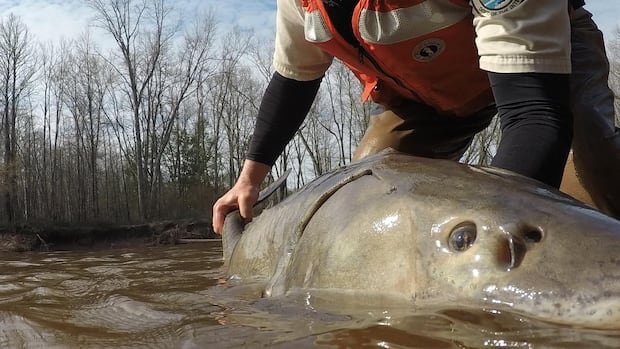
A recent study reveals that some of the lake sturgeon inhabiting the Great Lakes today could potentially be over 400 years old, challenging previous beliefs about their longevity. Despite their impressive lifespan and size—up to two meters long and weighing up to 180 kilograms—lake sturgeon face endangerment, particularly in the Great Lakes region where they are considered a species at risk.
Historically, overfishing and habitat destruction have decimated nearly 99% of the lake sturgeon population, necessitating human intervention to aid in their recovery. Researchers utilized data spanning over four decades of sturgeon captures across the Great Lakes to project a lengthier restoration process than initially estimated.
Contrary to traditional assumptions of a 150-year lifespan for sturgeon, the study’s findings propose that these ancient fish could live far longer. By analyzing growth patterns between capture events, scientists determined that some sturgeon growth rates suggest potential lifespans spanning centuries, a revelation supported by empirical data.
This new insight poses significant implications for conservation efforts, particularly in Canada, where conservation plans may require adjustments to accommodate the extended lifespan of sturgeon. Moreover, the critical role of sturgeon in the ecosystem, such as controlling invasive species like quagga mussels and gobies, underscores the urgency of preserving their populations.
For indigenous communities like the Anishinaabe, lake sturgeon hold profound cultural significance as revered “fish elders” due to their longevity and ancient lineage. Their symbolic role as intermediaries between different realms reflects their unique status in the natural world, resonating with traditional teachings and ancestral knowledge.
In light of these revelations, conservationists and researchers are reevaluating strategies to safeguard the future of lake sturgeon populations, recognizing the need for sustainable practices that align with the exceptional lifespan and ecological importance of these majestic creatures.

