
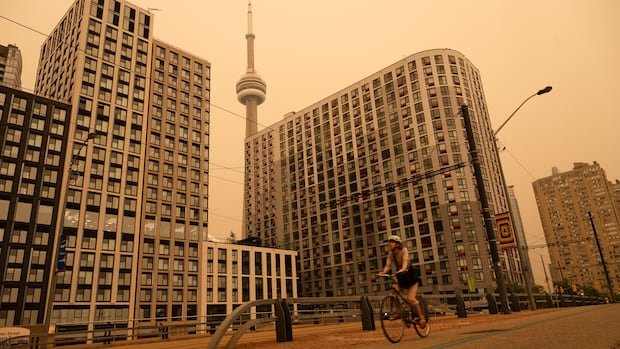
A recent report highlights that Canadians need to prepare for a future that could be 5 degrees Celsius warmer due to climate change. The second edition of Canada’s Changing Climate Report emphasizes the significant impact of human activities, particularly the burning of fossil fuels, on driving climate change. The report, released by the federal government, projects potential scenarios based on countries’ fulfillment of climate commitments.
According to the report, Canada could experience intensified warming if current climate policies persist, leading to a substantial temperature rise of 5 degrees Celsius by the end of the century. This warming trend could have severe consequences, such as the drastic reduction of glaciers in western Canada and a high likelihood of ice-free conditions in the central Arctic Ocean during most Septembers.
The report also warns of challenges in southern Canada, with projections of longer, more intense summer droughts, increased frequency of flash flooding, and atmospheric rivers. If global governments maintain their current climate policies, temperatures in Canada could increase by 6.9 degrees Celsius by the end of the century. However, a shift towards reducing greenhouse gas emissions and achieving net-zero by 2075 could stabilize Canada’s climate and limit warming to 3.5 degrees Celsius.
While the report presents a concerning outlook, the Canadian Climate Institute emphasizes that the projected 5-degree Celsius warming is not inevitable and can be mitigated through emission reduction efforts. The institute stresses that every degree of warming avoided can save lives, protect communities, and preserve the economy.
In response to the report, a climate advocacy group has called for urgent action to reduce emissions, citing recent severe weather events in Toronto as evidence of the accelerating impacts of climate change. Canada’s environment minister reaffirmed the country’s commitment to reducing emissions and achieving net-zero by 2050 as part of the ongoing efforts to combat climate change.

