
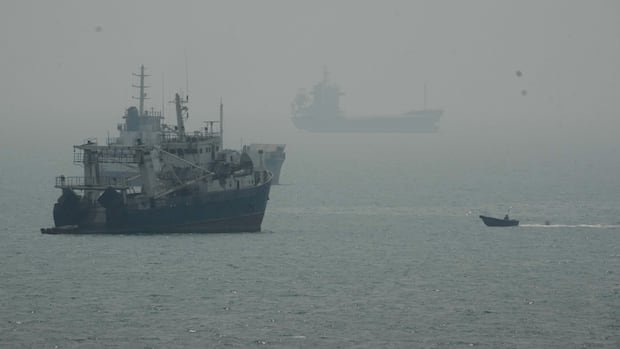
Iran announced on Wednesday that it had carried out an attack on 10 ships near the Strait of Hormuz in retaliation for the sinking of five Iranian oil tankers by the U.S. This exchange marked the most significant series of attacks on shipping by both sides since the commencement of the six-month-long conflict.
The Islamic Revolutionary Guard Corps (IRGC) of Iran stated that it had launched a ballistic missile strike on a U.S. base near Al Azraq in eastern Jordan. Additionally, they reported firing at two U.S. vessels and eight oil tankers that were trying to traverse a restricted area in the Strait of Hormuz designated by Iran.
The incidents in and around the crucial waterway caused a spike in oil prices, with the international Brent crude benchmark surpassing $100 per barrel for the first time since July. The ongoing conflict between Saudi Arabia and the Iran-aligned Houthis in Yemen has further added to the market uncertainty, with recent Houthi attacks in Saudi Arabia causing significant damage to oil installations and resulting in numerous injuries.
As a consequence of the escalating tensions, gas prices in the U.S. surged, with a gallon of regular gasoline averaging $4.15 on Tuesday, representing a 26% increase from the previous year. Diesel prices also rose substantially to $5.90 per gallon, marking a 59% year-over-year hike.
The uncertainty surrounding a potential resolution before the U.S. midterm elections has led to increased market volatility. Bank of America analysts expressed skepticism about the likelihood of a lasting agreement being reached in the near term.
In response to the soaring prices, Canada implemented an extension of the gas tax holiday until the end of January due to the significant rise in average gas prices across the country since the conflict began.
The U.S. military Central Command confirmed the destruction of five Iranian oil tankers, attributing the attacks as a response to the IRGC’s targeting of a U.S. Navy warship with ballistic missiles. Secretary of State Marco Rubio emphasized the U.S.’s stance of retaliating against any attempts to harm U.S. naval ships by Iran.
Iran declared an expanded maritime restricted zone encompassing parts of the Gulf of Oman and the Arabian Sea, with specific coordinates to be disclosed soon. In a separate incident, a drone strike hit an oil tanker carrying two million barrels of Iraqi fuel oil in Iraqi territorial waters, causing a fire on board but no reported casualties among the crew.
The Strait of Hormuz, a critical global oil passage, has been significantly affected by Iran’s actions, impacting the transit of essential resources. The U.S. has responded with a military blockade of Iranian ports, attempting to guide tankers through the strait amid heightened tensions in the region.
Recent data showed a minimal number of ships crossing the strait with transponders in the last 24 hours. Iran also claimed to have launched ballistic missiles at a U.S. base in Jordan, with conflicting reports on the extent of damage caused by the strikes. The ongoing hostilities have resulted in targeted attacks on U.S. bases throughout the region, with casualties reported in previous incidents.

