
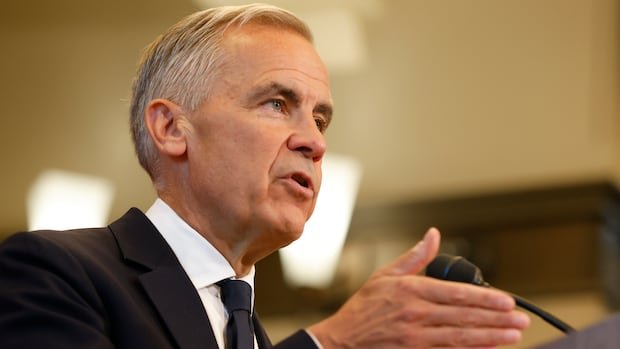
Prime Minister Mark Carney revealed that the collapse of negotiations with the Trump administration was due to unreasonable demands that would harm key Canadian industries such as automotive, steel, and aluminum. Despite making progress initially, the momentum shifted, leading to an impasse as the U.S. proposed terms unacceptable to Canada.
Contrary to Carney’s statement, U.S. Vice-President JD Vance accused Canada of presenting last-minute unreasonable demands and exploiting America. The specifics of the failed deal were not disclosed by the Canadian government, but Ontario Premier Doug Ford labeled it a “bad deal” and supported Carney’s decision not to proceed.
Following a tentative agreement in principle, discrepancies arose during the drafting phase between Canadian and American officials. The U.S. revised terms at the eleventh hour, excluding medium- and heavy-duty trucks from tariff relief, significantly impacting Canadian automotive production, including Ford’s F-Series pickups and GM Silverado vehicles.
Additionally, the U.S. sought to limit Canada’s autonomy in trade negotiations with other countries, a move contested by Carney as a threat to Canadian sovereignty. The negotiation breakdown was also attributed to insufficient American concessions on steel, aluminum, and derivative product tariffs.
In the final hours, the U.S. proposed sectoral tariffs on steel and aluminum, affecting trade partners with Canada. Carney insisted on mutually beneficial tariff alignments, rather than dictated terms. The dispute extended to cultural issues like bilingual product labeling, which the U.S. opposed, leading to disagreements over streaming content regulations.
Despite potential concessions, Carney stood firm on protecting Canadian interests and refused a deal that did not address key concerns. Public opinion largely supported Carney’s decision to walk away from the deal, emphasizing the need for economically viable terms in future negotiations.

