
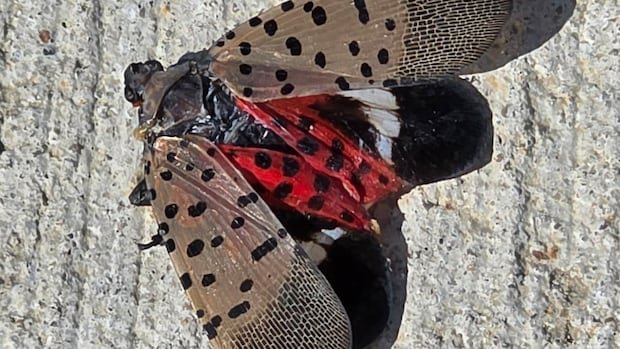
The Canadian Food Inspection Agency (CFIA) has identified an invasive insect that poses a threat to grapevines and other vegetation in Canada for the first time in Windsor. Previously, residents of Windsor had reported sightings of the spotted lanternfly, according to a non-profit organization dedicated to controlling invasive species. However, this recent detection marks the first time the insect has been identified through an official agency survey, as stated by the Invasive Species Centre.
The spotted lanternfly is notorious for causing damage to grapevines, which can have significant consequences for the grape and wine industry, as highlighted in a news release by the centre. Furthermore, the insect’s reach extends to impacting other agricultural sectors, horticulture, forestry, residential areas, and community parks. If left unchecked, the spread of the spotted lanternfly could lead to far-reaching economic, ecological, and social repercussions.
Originating from southeast Asia, the spotted lanternfly was initially discovered in North America in Pennsylvania in 2014. This pest has a wide-ranging diet, feeding on the sap of over 100 different plant species. To combat its potential threat, the Invasive Species Centre is urging the public to familiarize themselves with the insect’s characteristics and report any sightings to the CFIA promptly.
For effective reporting, individuals are encouraged to photograph the spotted lanternfly or its eggs, secure them in a sealable bag or container, and notify the CFIA. Providing accurate location details and images of the insect is crucial for the authorities to respond appropriately, including conducting site surveys and insect collection.
To aid in identification, the Invasive Species Centre and CFIA have shared several tips on recognizing the spotted lanternfly based on its physical characteristics, behavior, and life cycle stages. By being vigilant and proactive in reporting sightings, the public plays a vital role in preventing the further spread of this invasive species.
Additionally, the Invasive Species Centre offers guidance on minimizing the spread of the spotted lanternfly, such as inspecting vehicles and outdoor items for egg masses or insects when visiting infested areas, considering high-pressure car washes, and refraining from transporting firewood to prevent the inadvertent movement of the insect.
Overall, early detection and reporting are key in mitigating the potential impact of the spotted lanternfly on agriculture, forestry, and the environment in Canada.

