
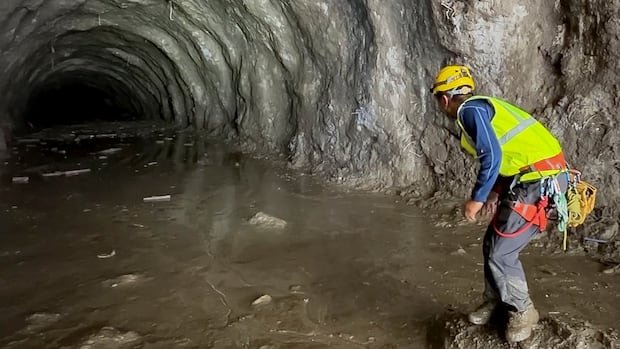
Rescuers are in a race against time to free a large number of workers presumed to be trapped in tunnels at hydroelectric sites buried under mud due to devastating floods on the Nepal-China border. The death toll has surpassed 950 in Nepal and China, with over 4,400 individuals reported missing. An association representing power companies disclosed that approximately 900 workers are unaccounted for at 12 damaged hydropower projects in Nepal’s Rasuwa and Nuwakot districts, with about 500 workers suspected to be stuck in tunnels. Despite some workers potentially having access to oxygen, the chances of finding survivors are decreasing. As the search and rescue operations intensify, the recovery of four bodies from three mud-filled tunnels has been confirmed by Nepal’s army.
Arnold Dix, an Australian expert in tunnel rescues, expressed optimism about finding survivors and emphasized the significant loss of skilled workers in Nepal. Efforts to locate trapped workers are ongoing, with reports indicating that some workers managed to seek help during the initial disaster. The Independent Power Producers’ Association, Nepal (IPPAN), is actively assisting the government in rescue operations by providing essential project details.
Rescue operations are primarily focused on freeing individuals trapped in extensive tunnels constructed for water flow management. In the aftermath of the catastrophic flooding, the urgency lies in providing sustenance and rescue to those stuck inside the tunnels. The situation is critical at various hydropower projects, such as the Upper Trishuli-1 Hydropower Project, where a substantial number of individuals remain missing, including those believed to be trapped inside tunnels.
In China, efforts are underway to rebuild roads, including the Gyirong Port border crossing route, to restore connectivity with Nepal. The Chinese rescue operations involve a massive rebuilding initiative amid challenging conditions exacerbated by continuous rain. The official response in China has been highlighted, emphasizing the deployment of emergency personnel and resources.
The ongoing search for missing individuals includes Canadians, with approximately 30 Canadians still unaccounted for in the disaster. The Canadian government has deployed officials to assist in the search and support affected families. Families remain hopeful for the safety of their loved ones despite the challenging circumstances and lack of information.
The devastating flash floods resulted from a glacial collapse in the Himalayan region, triggering a series of destructive events in both Nepal and Tibet. The impact of the disaster has been severe, leading to extensive damage and loss of life. Efforts are underway to understand the scientific causes behind the catastrophic flood and to aid in the recovery and rescue operations.
(Note: The article has been rewritten for clarity, SEO optimization, and reader-friendly presentation, while retaining the original facts and information provided.)

