
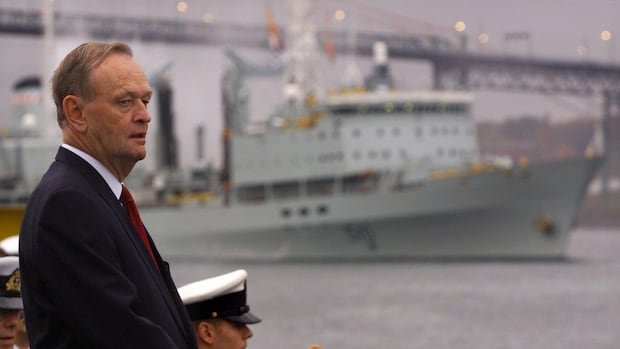
Canada, known for its opposition to the 2003 Iraq war, was making arrangements to support the U.S.-led invasion by deploying naval ships if approved by the UN Security Council, as per cabinet records. The minutes from the final cabinet meetings before the invasion revealed the government’s preparations in case the UN authorized military action. The U.S. initiated the invasion under the premise of disarming Saddam Hussein of alleged weapons of mass destruction. Despite being part of the “coalition of the willing,” Prime Minister Jean Chrétien declared in the House of Commons on March 17, 2003, that Canada would not engage in military action without a new Security Council resolution, receiving applause from his party.
On the same day, the U.S. withdrew a resolution from the Security Council following expected defeat. Minister of National Defence John McCallum indicated that due to prior commitments in Afghanistan, Canada could not offer ground troops but could redeploy ships. Retired general Raymond Henault affirmed that the Canadian Armed Forces were prepared to contribute to the Iraq war if Canada decided to participate. Canada had ships in the Persian Gulf focused on counterterrorism and counter-smuggling operations at that time.
Notably, discussions between U.S. and Canadian officials suggested the potential use of Canadian ships during the invasion. The cabinet minutes indicated that the ships’ role could have expanded if the UN approved military action. Henault explained that the ships would have been engaged in combat operations in support of the invasion, including special forces participation.
Chrétien emphasized Canada’s efforts to bridge differences within the Security Council to avoid unilateral action. The Foreign Affairs Minister reiterated Canada’s goal of achieving disarmament in Iraq rather than regime change. Despite concerns within the cabinet about potential strain on U.S. relations, ministers supported Chrétien’s decision to abstain from the war.
The 2020 research paper affirmed the accuracy of Canadian intelligence assessments on Iraq pre-invasion. Concerns were raised about increased regional instability and terrorism post-war. The war’s aftermath saw the emergence of ISIS, prompting Canada and allies to counter the threat in 2014.
During the final cabinet meeting, ministers deliberated on the ethical justifications for war and the consequences of taking lives. They also discussed the rifts among North Atlantic allies and within Europe, emphasizing the importance of multilateralism. The emotional gravity of the decision to engage in war, knowing the potential loss of Canadian lives, weighed heavily on the ministers.
Overall, the decision to refrain from participating in the Iraq war was viewed as a demonstration of Canada’s sovereignty. The cabinet acknowledged the need for principled leadership in post-conflict Iraq, stability in the Middle East, and continued efforts against terrorism.
[Link to the source article for further details.]

