
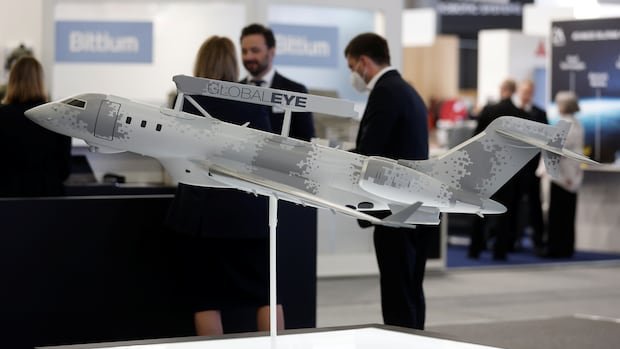
Ottawa entered negotiations to purchase six Saab GlobalEye surveillance planes without assurances that they would fully meet military requirements, sources revealed to CBC News. A recent evaluation found that the aircraft only partially meets the military’s needs and will require modifications for operational readiness.
Prime Minister Mark Carney surprised many by announcing the acquisition plan at the CANSEC arms expo in Ottawa last May. The deal included establishing a production line in Canada for both domestic and export markets.
The Royal Canadian Air Force commander, present at the announcement, was reportedly taken aback, according to industry sources. The contractors involved, who spoke on condition of anonymity, were not disclosed to maintain their relationship with the government.
At the time of the announcement, potential bidders were not informed of the specific technical and operational requirements for the new airborne surveillance fleet. Secretary of State for Defence Procurement, Stephen Fuhr, emphasized the need to consider factors like cost, job creation, and geopolitics in major military procurements.
The Defence Investment Agency, led by Fuhr, disputed claims that Ottawa had no guarantees about the GlobalEye meeting military requirements. They asserted that the decision was based on the aircraft’s capabilities and suitability for Canada’s needs.
Following the announcement, the Canadian military engaged with Saab to discuss the aircraft’s features in detail. Concerns were raised about the GlobalEye’s limitations, such as radar coverage, crew stations, and connectivity to the NORAD network.
Saab has proposed modifications to address these shortcomings, including additional radar installations and air-to-air refueling capabilities. The military also seeks a radar plane with in-flight refueling capacity for Arctic operations, currently absent in the GlobalEye.
Saab officials expressed readiness to meet Canadian military expectations and highlighted their adaptable engineering process to accommodate customer demands.
Critics question the prioritization of economic benefits over defense needs, citing concerns about the aircraft’s capabilities and the potential risks of compromising operational requirements for job creation.
The article underscores the tension between job creation goals and military requirements, emphasizing the importance of aligning defense policy with procurement decisions. Experts urge clarity on defense policy priorities to ensure that military needs are not overshadowed by industrial interests.

