
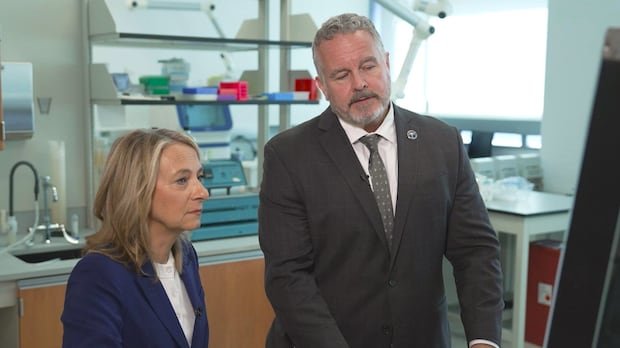
In a Manhattan lab, forensic experts in white lab attire are diligently fulfilling a commitment made 25 years ago. They are extracting DNA from numerous human remains retrieved after the World Trade Center terrorist attacks. The aim is to match them with samples provided by families, such as toothbrushes and razors.
The scientific methods used to extract DNA and the forensic investigative techniques have evolved significantly since 2001. Mark Desire, the assistant director of forensic biology at the New York City Office of the Chief Medical Examiner, emphasized the emotional significance of identifying and reuniting loved ones with their families.
Approximately 40% of the 2,753 individuals who perished at Ground Zero remain unidentified, including around 10 Canadian victims. Recently, the lab achieved its first identification of previously unknown remains through a groundbreaking approach. The woman’s identity remains confidential, marking the lab’s first identification in a year.
The innovative technique merges DNA testing with genetic genealogy, which involves family tree research by the New York City Police Department members. This advancement is seen as a new frontier by Dr. Jason Graham, the Chief Medical Examiner in New York.
The excavation and preservation of remains pose significant challenges. Desire, who was a novice scientist at the New York crime lab during the 9/11 events, recalled the daunting task of preserving evidence amidst the chaos. The lab has persevered to fulfill the promise of identifying all victims, despite the obstacles presented by the destructive conditions at Ground Zero.
The identification process has evolved from using fingerprints and dental records to advanced DNA technologies. Extracting DNA from bone fragments remains a formidable task due to the material’s toughness. The lab faces difficulty in identifying remains that are badly burned, as the DNA extraction process is arduous.
A new technique involving genomic sequencing and genealogical methods offers renewed hope in identifying more remains. The lab encourages families to provide samples to facilitate more matches and bring closure to those affected by the tragedy.
Despite ongoing efforts, some families opt not to receive notifications if a match is made for their loved ones. This decision is respected by the World Trade Center anthropologist, Jennifer Odein, who serves as the liaison between families and the lab.
The complexity of grief is evident in the diverse responses of families to the identification process. While some seek closure through identification, others find solace in honoring their loved ones in their own way. The repository at the 9/11 Memorial and Museum holds the unidentified remains, providing a place for remembrance and reflection.

