
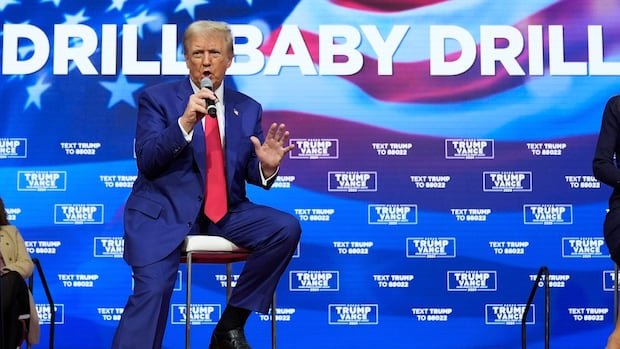
In his 2024 U.S. presidential campaign, Donald Trump vowed to support the oil industry with a “Drill, baby, drill” mantra. However, his recent policies have inadvertently spurred a shift towards renewable energy. Tariffs on China and the repercussions of the Iran conflict initiated by Trump have prompted many nations to explore alternative energy sources.
According to Kingsmill Bond from energy think-tank Ember, the increase in the price and risk of oil has driven countries towards renewable energy solutions. This shift is evident in the surge of global electric vehicle (EV) sales, with significant spikes in EV exports from China to countries like Brazil, South Korea, Australia, and Italy.
Countries are adapting their energy infrastructure to embrace renewables. The U.K. reported a notable rise in solar panel sales, while energy costs in Asia have propelled the adoption of rooftop solar. Despite Canada’s pipeline expansion plans, the government aims to double the electrical grid’s capacity by 2050 through a new nuclear strategy.
The global energy transition was already underway, with renewables surpassing coal power in electricity generation. The Iran conflict highlighted the risks of fossil fuel dependency, prompting countries to accelerate clean energy adoption. Nations like Thailand and the Philippines have expedited their shift to renewables in response to energy crises.
While some countries have seen a temporary increase in coal usage due to LNG shipping constraints, proactive steps towards clean energy are also being taken. Pakistan and the Philippines have ramped up coal utilization while simultaneously boosting their renewable energy capacity, particularly in solar energy.
The trade war and military actions under Trump’s administration have spurred investment in clean energy globally. China’s dominance in clean tech manufacturing has facilitated the transition to renewables. The decreasing costs of solar, wind, and battery storage have made clean energy more cost-effective than traditional fossil fuels.
The ongoing global energy transition is inevitable, with crises like the Iran conflict accelerating the shift towards renewables. Despite fluctuations in oil prices, the momentum towards clean energy continues to gain traction as nations prioritize energy security and sustainability.

