
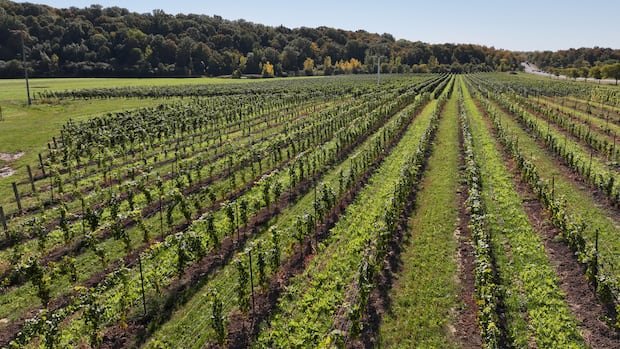
U.S. President Donald Trump has issued a directive to halt the import of Canadian alcohol starting later this month. However, for a winery situated in Ontario’s Niagara region, the tariffs imposed by Trump have already thwarted their plans to sell to American consumers.
Jamie Slingerland, the viticulture director at Pillitteri Estates Winery, expressed that no product could effectively compete in a market with such steep tariffs, pointing to the 50 per cent tariff implemented from August 22 onwards. The winery, located in Niagara-on-the-Lake, Ontario, has five primary U.S. buyers who appreciate their distinctly Canadian product but are now left dismayed by the situation.
Last Tuesday, Trump signed proclamations that included banning the import of alcoholic beverages and other items commencing on September 29, alongside imposing 50 per cent tariffs on various goods like whey, molasses, furniture, paper, and wood products.
This decision follows a 20-month period of increasing trade tensions between Canada and the U.S.
In anticipation of the tariffs, Pillitteri Estates Winery expedited its export process by shipping products four months earlier than planned. Slingerland mentioned that their buyers are storing the wine until closer to the holiday season. He attributed their swift action to the winery’s smaller, independent nature, indicating that other wineries may not have had the same flexibility.
The Ontario wine industry, which includes 186 wineries, contributes approximately $711 million in revenue and sustains around 22,000 jobs, according to the Grape Growers of Ontario association. A 2019 study by Wine Growers Ontario revealed that the industry generates an economic impact of $5.49 billion for the province through taxes, tourism, and suppliers.
Grape Growers recommended that businesses affected by trade disruptions explore federal support programs such as the Regional Tariff Response Initiative offered by the government of Canada.
John Boynton, president of Arterra Wines, expressed disappointment over the import ban, emphasizing the need for stability and predictability in the industry to facilitate planning, investment, and growth. He highlighted the challenges posed by the use of alcohol products as leverage in trade disputes, affecting businesses, employees, and consumers on both sides of the border.
Both Slingerland and Boynton urged the federal government to extend the Wine Sector Support program beyond its current end date of March 31. Agriculture and Agri-Food Canada affirmed their commitment to engaging with the Canadian wine industry to enhance competitiveness and resilience in the prevailing circumstances, noting that the program has provided $343 million in support to wineries over five years.

