
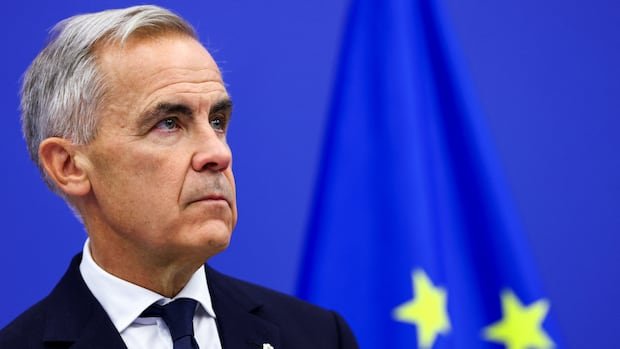
Prime Minister Mark Carney emphasized fundamental values such as democracy and trustworthiness during his recent address at the European Parliament, where he advocated for closer trade and defense partnerships. However, some analysts caution that with the surge of far-right factions in Europe, certain key allies may not always align with these values. As Canada looks to broaden its global trade relations amid challenges like U.S. President Donald Trump’s trade policies, it faces the reality that many far-right European politicians share similar perspectives on migration, isolationism, and minority issues.
According to political experts, populist far-right parties pose a significant threat to liberal democracy in Europe, with some politicians viewing Trump favorably. For instance, in Germany, where a recent intelligence-sharing agreement was signed with Canada, the far-right Alternative for Germany (AfD) has made notable gains in regional elections, promoting nationalist and isolationist agendas. Despite being classified as extremist by the German intelligence service, the AfD continues to garner strong support while Chancellor Friedrich Merz faces dwindling approval ratings.
The rise of far-right movements is not limited to Germany. In France, Marine Le Pen’s National Rally party has quadrupled its seats in the French Senate, echoing Trump’s stances on immigration and skepticism towards international bodies like the EU and the United Nations. As Le Pen eyes the French presidency in the upcoming election, experts stress the influential leadership roles of France and Germany within the EU and the potential impact of their political shifts.
While the European political landscape evolves, experts suggest that Canada should focus on building robust partnerships with various EU member states to diversify its alliances and reduce dependency on any single trading partner, akin to its approach with the U.S. Strengthening ties in sectors like energy, strategic minerals, and defense with individual EU nations is crucial to solidifying agreements and fostering tangible collaborations.
Moreover, leveraging the EU’s institutional stability alongside fostering relationships with member states can help Canada navigate the changing political dynamics in Europe. By positioning itself as an essential and reliable partner, Canada can mitigate the risks of instability and safeguard its alliances amidst evolving political climates.

