
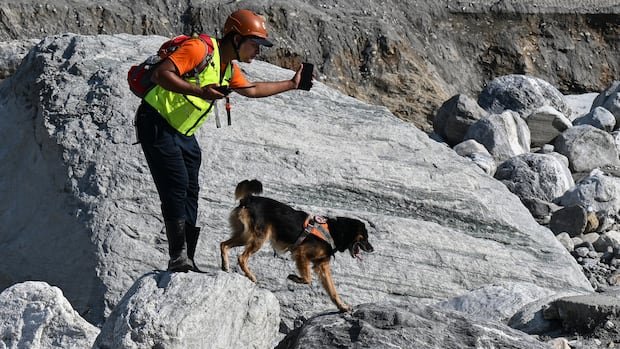
After weeks of catastrophic floods in Nepal leaving thousands missing, families are feeling conflicted following the government’s decision to halt search operations. Prime Minister Balendra Shah’s office announced the cessation of search and rescue efforts for victims of the August 26 floods. Instead, the focus will shift towards rehabilitation and reconstruction, particularly in remote areas where infrastructure damage hampers aid delivery.
While 1,455 bodies have been recovered, 5,285 individuals, including hundreds of foreign nationals, remain unaccounted for. Global Affairs Canada reported 29 Canadians and permanent residents in Nepal and Tibet whose status remains unknown post-floods. Two recent rescue incidents briefly reignited hopes, with workers rescued from a tunnel and a Chinese man found alive.
Families of the missing have staged protests, urging enhanced search efforts. Usha Khatri, seeking her husband, criticized the government’s decision, emphasizing the need for continued search operations. Similarly, Mahesh Shrestha demanded the search for his brother, an engineer at a hydropower plant, to persist.
Some families welcomed the search halt, expressing a desire for government-issued death certificates to find closure. Nirajan Poudel, who lost five family members, acknowledged the slim chances of survival and emphasized the need for closure. Despite symbolic funerals conducted by those with missing relatives, the government has yet to issue death certificates due to legal constraints.
The government foresees a $4.77 billion US cost for reconstruction, with 33,000 people affected and 7,500 homes damaged or destroyed. The need for certificates is crucial for compensation, insurance claims, and property inheritance, but the government’s response to this issue remains pending.

