
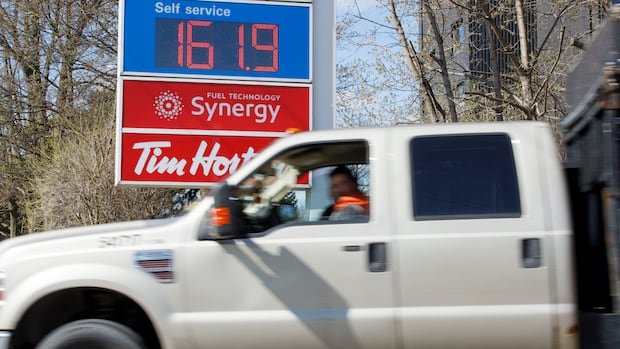
Canada’s yearly inflation rate climbed to 3.1 percent in September, as reported by Statistics Canada on Monday. This development poses a challenge for the Bank of Canada ahead of its upcoming rate announcement. In September, the consumer price index saw a 0.1 percent increase compared to August, driven by surging benchmark oil prices due to Middle East conflicts. Despite a 27.8 percent year-over-year rise in pump prices, the shift to cheaper winter gasoline blends provided some relief. CIBC’s chief economist Avery Shenfeld noted that apart from gasoline, core inflation measures hovered around two percent.
Excluding gasoline, consumer prices saw a 2.2 percent year-over-year uptick in September. The average price for a liter of regular gasoline across Canada reached $1.824, up nearly 33 percent from a year ago. Diesel prices also surged by almost 80 percent over the past year. Grocery prices rose by 1.7 percent year over year in September, a decrease from the 2.8 percent increase in August, mainly due to lower prices of fresh vegetables and reductions in the “sugar and confectionary” category.
Shelter prices increased by 1.8 percent year over year, up from 1.5 percent in August. Statistics Canada’s core inflation indicators slightly eased in September on a monthly basis. Economists had forecasted a 3.18 percent year-over-year rise in the September consumer price index. Bank of Canada Governor Tiff Macklem cautioned about the impact of persistently high global energy prices on inflation outlook, considering ongoing Middle East conflicts.
Inflation is projected to average 3.7 percent over the next year, according to the Bank of Canada’s latest Business Outlook Survey. Economists highlighted the need for the Bank of Canada to carefully navigate the current economic landscape, balancing potential rate hikes due to energy-linked inflation against other economic soft spots like the job market. Policymakers are closely monitoring escalating energy market tensions and their potential impact on broader economic stability.

