
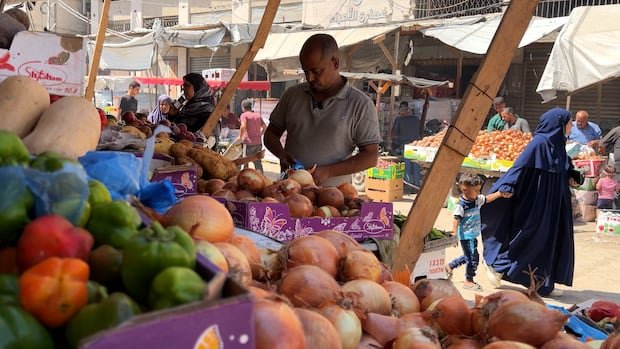
The streets of Gaza remain cluttered with debris, waste, and the remnants of damaged structures. However, after three years of conflict between Israel and Hamas and almost a year of a delicate truce, the memories of bombings, airstrikes, and cries for help have subsided. Now, the atmosphere is filled with distant conversations, car horns, and the hustle and bustle of daily life.
On the upcoming Wednesday, Israelis and Palestinians will commemorate the grim anniversary of the October 7, 2023, attack by Hamas on Israel, resulting in the loss of 1,200 lives and 251 hostages in Gaza according to Israeli records. The conflict has led to approximately 74,245 deaths in Gaza, as reported by the local health ministry. Since the ceasefire in October last year, the ministry has recorded 1,462 Palestinian fatalities.
Presently, the region is gradually transitioning from focusing solely on survival to contemplating the future. Many civilians are exploring options for more sustainable housing and contemplating sending their children back to school. To gain insights into how individuals in Gaza are coping with shelter, food, and education, CBC News conducted interviews with six residents.
Shelter continues to be a scarce resource in Gaza. During the war, frequent displacements forced many to seek refuge in makeshift camps across the enclave. Following the ceasefire, these displacements have become less frequent, prompting residents to consider establishing more permanent residences. For instance, Mohamed Al-Arabeed, aged 44, residing with his family of eight in the Al-Maqousi camp near Gaza City, shared his struggle of maintaining a deteriorating tent that has survived three winters in Gaza.
In another part of Gaza City, Abdullah Abu Hajar, aged 47, resides in a building on the brink of collapse with his family of eight. Despite the warning signs indicating the potential collapse of the structure, Abu Hajar and 17 other families residing there feel trapped with no alternative accommodation.
Regarding food scarcity, a global hunger report in August 2025 confirmed famine conditions in Gaza City due to the war and restrictive border measures by Israel, leading to severe food shortages. Mohammed Barghout, a father of four, described the exorbitant prices and limited food options in the local market, making it challenging for families to afford basic necessities.
Education has resurfaced as a priority in Gaza, with Rasha Al-Dos, a 44-year-old mother of four, resuming her role as a teacher at Warda al-Huda private school following the death of her husband during the conflict. Despite the challenges, she remains grateful for the opportunity to educate children, emphasizing the resilience of the community in striving for a better future.
As Gaza navigates the aftermath of the prolonged conflict, the residents continue to demonstrate resilience and hope for a brighter tomorrow despite the ongoing challenges they face.

