
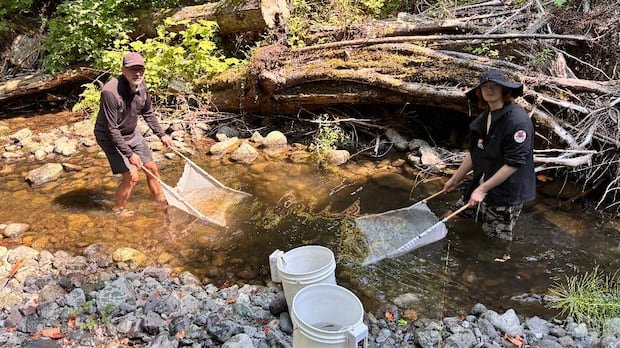
Parts of British Columbia are experiencing severe drought conditions this summer, leading to water use restrictions in areas like Bessette Creek to protect salmon populations. Temporary protection orders for the Salmon River watershed have been issued multiple times due to increased wildfire risk and low water levels. Bob Crandall, treasurer of the Cowichan Lake Salmonid Enhancement Society, highlighted the worsening dryness of streams connected to Lake Cowichan, necessitating manual fish rescues known as fry salvage.
The society, in collaboration with the Ts’uubaa-asatx Nation and volunteers, is relocating fish like salmon, trout, and char to areas with more water. However, the task is becoming more challenging with changing climate patterns. Crandall noted the increased distance streams are drying up, requiring extra effort for the rescue operations.
Fry salvage involves using aerators, bubblers, and nets to ensure fish survival during transport. The Society’s dedication stems from a commitment to preserving fish as essential ecosystem components. Despite the effectiveness of these efforts, scientists caution that such interventions have limitations and might not offer a sustainable long-term solution.
In France, drought and extreme heat have also impacted fish populations, with relocation efforts proving ineffective. Jean-Pierre Faure of the Fédération de Pêche du Rhône highlighted unprecedented weather events leading to severe fish stress and mortality. He emphasized the need for ecosystem restoration and adaptive water management strategies rather than relying solely on rescue operations, which can be costly and impractical on a large scale.

