
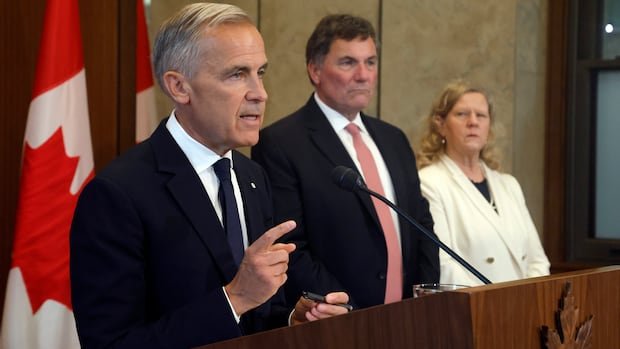
After a week of tense negotiations, Prime Minister Mark Carney addressed the public on Saturday morning to clarify the reasons behind the breakdown of trade talks with the United States. Carney emphasized Canada’s year-long efforts to negotiate a fair trade deal and expressed disappointment over last-minute changes proposed by American negotiators that he deemed unfair and economically unsound.
The sudden turn of events came when U.S. Trade Representative Jamieson Greer revealed that Canada had refused to finalize the agreement. Speculations and leaks had circulated prior to this announcement, hinting at the challenging task Carney faced in convincing Canadians to accept the terms of the deal.
Former Canadian chief negotiator Steve Verheul and ex-foreign affairs minister Chrystia Freeland had expressed concerns about potential concessions made by Canada in the deal. The imposition of new tariffs by the U.S. was estimated to potentially result in job losses for up to 90,000 Canadians, highlighting the economic impacts of the failed negotiations.
With the negotiations on hold, both Canadian and American officials are in a state of uncertainty. The current trade landscape reflects a shift towards protectionism and power dynamics, as observed by political strategist Kory Teneycke. The ongoing trade tensions are compared to a chronic ailment requiring continuous management and adaptation.
Carney acknowledged the changing dynamics in America’s approach to trade relationships and emphasized the need for a reevaluation of future trade partnerships. Despite the setback, he remains hopeful that both sides can work towards a mutually beneficial resolution.
As the aftermath of the collapsed talks unfolds, questions arise about potential retaliatory actions and the prospects of returning to the negotiation table. Carney’s stance on prioritizing a good deal over no deal resonates with Ontario Premier Doug Ford’s sentiments. The road ahead may be challenging, but the importance of finding a resolution remains paramount.

