
Australian scientists have developed a groundbreaking online tool for analyzing the climate impact of fossil fuel projects, with a Canadian offshore oil venture as a case study. The tool, named Carbon Impacts Tracer, can assess how proposed mining operations, offshore oil installations, or other energy initiatives contribute to global warming, glacier loss, and potential human casualties.
According to Sarah Perkins-Kirkpatrick, a climate science professor at the Australian National University, the Carbon Impacts Tracer connects the emissions from individual fossil fuel projects to their specific warming effects on the planet, subsequently identifying the direct consequences of such warming. By utilizing carbon dioxide emission data provided by project proponents and referencing scientific research, the tool can estimate the projected global temperature rise and its real-world implications, including impacts on coral reefs, food production, and employment.
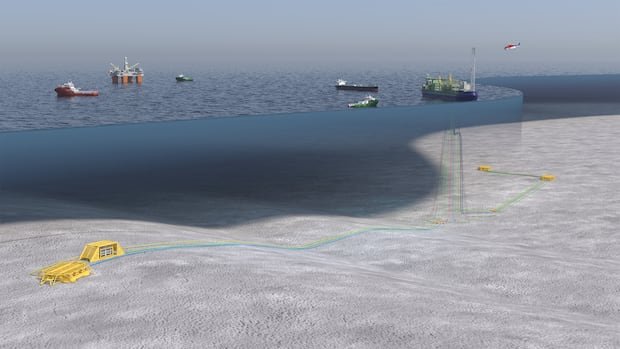
The Carbon Impacts Tracer was launched recently, featuring analyses of various Australian projects, a UK initiative, and the proposed Bay du Nord offshore oil project in Canada. The Bay du Nord project, led by Equinor, is anticipated to tap into over 430 million barrels of oil reserves. The tool’s calculations indicate that the project could result in 188 megatonnes of CO2 emissions over two decades, leading to a minute temperature increase globally. Additionally, the tool predicts elevated heat exposure for over 111,000 individuals, along with 25 heat-related fatalities in Europe. It also forecasts glacier loss, sea level rise, job losses, and increased poverty due to pollution from the project.
While Equinor has not responded to requests for comments, climatologist Joel Finnis from Memorial University in Newfoundland and Labrador highlighted the tool’s ability to consolidate and simplify complex research findings for public comprehension. The tool challenges arguments favoring new oil endeavors by emphasizing the substantial human and environmental costs associated with seemingly minor projects.
Maria Nawaz, who heads the climate change accountability project at the University of New South Wales, emphasized the historical difficulty of establishing the real-world impacts of fossil fuel ventures. The Carbon Impacts Tracer is expected to assist governments, regulators, and the public in evaluating proposed projects, potentially strengthening climate litigation efforts by holding entities accountable for their emissions.
Nawaz suggested that insurers and economists could leverage the tool to assess project risks and economic implications. Currently, the tool focuses on projected developments rather than existing operations and aims to include more proposed projects as additional data becomes accessible.

