
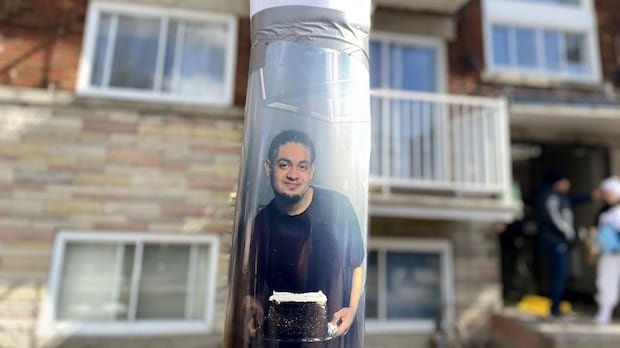
A recent report by a coroner has determined that the death of a 29-year-old man following an altercation with police was accidental, with the restraint technique used by officers likely playing a role in the outcome. Abisay Cruz passed away on March 30, 2025, after an incident that originated on a balcony in Saint-Michel, a neighborhood in the city. Notably, Cruz was one of two individuals who lost their lives in separate police operations conducted by the Montreal police within a 12-hour timeframe that weekend. The incident, along with footage of the intervention that circulated on social media, led to protests in the area and exacerbated existing community mistrust toward law enforcement.
The controversial “hogtie technique,” employed by the police in this case, involves binding a person’s limbs together behind their back while they are lying face down. Coroner Géhane Kamel’s investigation revealed that Cruz’s demise was linked to “cocaine intoxication and likely positional asphyxia during the police intervention.” Kamel emphasized that the hogtie method is widely discouraged and prohibited by several law enforcement and medical bodies due to its association with fatalities in custody and significant safety and human rights concerns. She stated that it was highly probable that this restraint method contributed to Cruz’s death.
Kamel’s report highlighted Cruz as the second youngest among five siblings, described as a loving individual with strong family ties. Leading up to his tragic end, Cruz faced potential deportation to Honduras, a stressor identified by the coroner. On the day of the incident, a 911 call reported a distressed individual, later identified as Cruz, near Pie-IX Boulevard and 47th Street. While police portrayed Cruz as an immediate physical threat, other witnesses offered contrasting accounts, with one witness indicating that Cruz was cooperative before the situation escalated. Despite differing testimonies, Kamel believed there was a perceived threat to the individuals inside the apartment and Cruz himself, leading to the involvement of five police officers in the restraint process.
The Bureau des enquêtes indépendantes (BEI), Quebec’s independent police oversight body, investigated Cruz’s death, ultimately deciding not to press criminal charges against the officers involved. However, Kamel raised concerns regarding the police handling of the situation. Officers reportedly maintained Cruz in a prone position for over two minutes before repositioning him, a delay that she criticized. Additionally, Kamel pointed out the lack of leadership from a supervising officer on the scene, noting the failure to intervene as Cruz’s condition deteriorated. She recommended that the Service de police de la Ville de Montréal (SPVM) officially prohibit the hogtie technique, equip officers with naloxone kits, and implement body-worn cameras for officers responding to crisis situations or using force.
Montreal police affirmed their commitment to implementing Kamel’s recommendations, clarifying that the hogtie technique is not part of their training curriculum. They emphasized the importance of recognizing medical distress signs and providing prompt medical assistance post-control. Alain Babineau, a former RCMP staff sergeant associated with The Red Coalition, expressed concerns over the coroner’s findings, highlighting the longevity of the controversial technique within law enforcement practices. The report also criticized Urgences-santé for facing recurrent service shortages, noting that only one advanced paramedic team was available across Montreal on the day of Cruz’s passing.

