
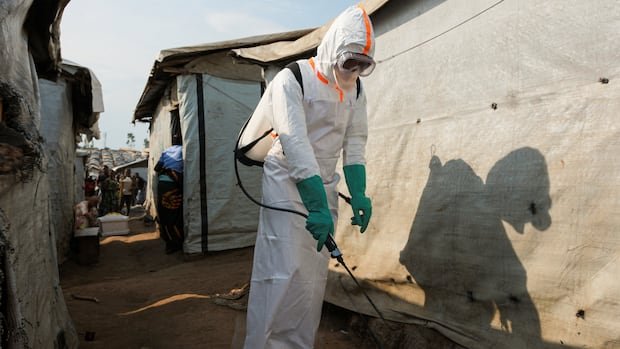
The Ebola crisis in the Democratic Republic of Congo has reached unprecedented levels, becoming the deadliest outbreak in the country’s history. As of August 16, the public health ministry reported a staggering 2,378 deaths due to the virus. The World Health Organization’s Director-General, Tedros Adhanom Ghebreyesus, expressed concern over the outbreak’s rapid spread, labeling it the second-largest Ebola outbreak ever recorded and emphasizing the urgency of the situation.
Ebola is a severe disease caused by orthoebolaviruses, with four strains affecting humans: Zaire, Sudan, Taï Forest, and Bundibugyo, the latter identified in the current outbreak, the 17th in the D.R.C. The virus spreads through close contact with infected animals like fruit bats or chimpanzees and then between humans via bodily fluids or contaminated objects.
The outbreak, declared in May, is concentrated in eastern D.R.C., near the borders with South Sudan and Uganda. The first suspected case involved a health worker who presented symptoms in late April and subsequently passed away. The speed of this outbreak surpasses previous ones, with over 5,000 cases reported in the D.R.C. as of August 16, predominantly in the Ituri province.
Several factors complicate the response to the outbreak, including the lack of a vaccine or specific treatment for the Bundibugyo strain, ongoing armed conflicts, mass displacement, cross-border movements, and resource constraints. Building trust in public health efforts is crucial, as fear and misinformation deter individuals from seeking medical assistance.
Efforts to contain the outbreak involve testing, contact tracing, safe burials, and isolation treatments. Deployment of more health workers and resources is essential, as well as increased international support. Collaboration with local communities, scaling up response efforts, and bolstering healthcare infrastructure are vital steps to control the spread of Ebola in the region.

