
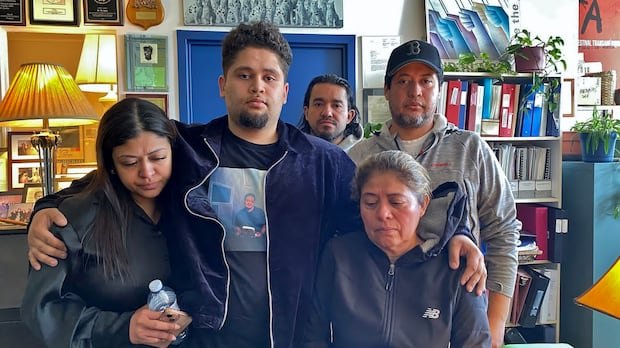
The family of Abisay Cruz is questioning the Montreal police’s use of a controversial restraint method that played a role in his death. A newly released coroner’s report did not clarify why officers employed a technique not taught by the police service. Abisay’s brother, Josué Cruz, expressed a desire to comprehend the reasons behind the force used and why his brother’s situation was not handled differently, emphasizing that Abisay needed help during his crisis.
Abisay, a father and the second youngest of five siblings, passed away on March 30, 2025, following a police intervention in Montreal’s Saint-Michel neighborhood. The family witnessed Abisay being restrained, handcuffed, and pinned to the ground, causing deep trauma and devastation.
The coroner’s report stated that Abisay’s death was accidental, with the hogtie technique used by officers identified as a likely contributing factor. This technique involves binding a person’s limbs behind their back while they lay on their stomach. The report highlighted concerns about safety and human rights violations associated with this method.
The tragic incident unfolded when police responded to reports of a distressed man on an apartment balcony. Abisay, facing deportation to Honduras, exhibited signs of extreme stress and had a high level of cocaine in his system. Despite efforts to calm him down, Abisay was restrained for over two minutes before being moved to his side. Subsequently, he was placed in a hogtie position and later pronounced dead at the hospital.
Montreal police and the provincial police academy do not teach the hogtie technique, emphasizing the importance of recognizing medical distress and providing prompt medical care. The coroner recommended banning the hogtie practice and equipping officers with naloxone kits and body cameras for crisis situations.
The family, community members, and activists are seeking transparency and accountability regarding the circumstances leading to Abisay’s death. They demand a thorough investigation into police actions and emphasize the need for clear answers and responsibility in handling such interventions to prevent future tragedies.

