
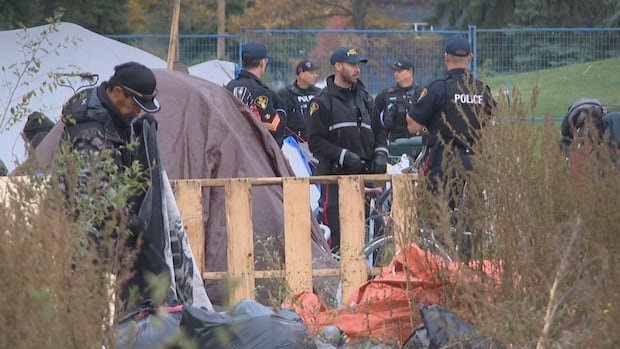
A Saskatoon attorney has raised concerns regarding the handling of a homeless advocate who allegedly spent nearly nine hours in police custody during the evacuation of the encampment where he resided. The encampment on Avenue K, housing over 100 individuals, was dismantled by authorities, including police and fire officials.
David Fineday, a prominent advocate for the homeless, resided in the encampment and recounted that he was alerted about the police presence while he was out with his son. Upon returning, he intended to engage in a discussion with the officers but was swiftly apprehended and taken into custody.
Fineday’s legal representative disclosed that he was charged with mischief over $5,000 and detained for the entire duration of the encampment clearance. Fineday mentioned that both he and his son were held from 8:30 a.m. CST until around 5:30 p.m., despite assurances of prompt release for paperwork completion.
The prolonged detention prompted Community Legal Assistance Services for Saskatoon Inner City Inc. (CLASSIC) to question the arbitrary use of police authority and the rationale behind preventing Fineday from participating in the encampment’s evacuation. CLASSIC expressed concerns over the lack of clarity regarding the detention reasons and administrative processes.
Saskatoon police attributed Fineday’s extended detention to processing duration, citing varying factors affecting the time required for arrested individuals. The police declined to provide additional specifics due to the ongoing legal proceedings related to the mischief charge against Fineday.
During the encampment clearance, approximately 80 tents were removed, and barriers were installed to secure the area. The cleanup operation collected nearly 6,000 kilograms of waste, with CLASSIC noting a significant portion consisted of personal belongings belonging to the encampment residents.
Following his release post-clearance, Fineday lamented the loss of his living space and the absence of his friends who resided there. CLASSIC criticized the detention’s impact on Fineday’s ceremonial responsibilities and highlighted community support in managing his possessions during his absence.
CLASSIC emphasized that extended police detentions typically involve intoxicated or public risk individuals, contrasting with Fineday’s long-standing sobriety. Fineday and CLASSIC expressed dissatisfaction with the lack of clarity regarding the charges against him and questioned the circumstances leading to his arrest.
Fineday’s son, also detained, opted for privacy, and further details are expected post-Fineday’s court appearance on November 10. Fineday is currently seeking housing support through Bridge City Warmth and advocating for enhanced addiction services and constructive dialogues on homelessness in Saskatoon.

