
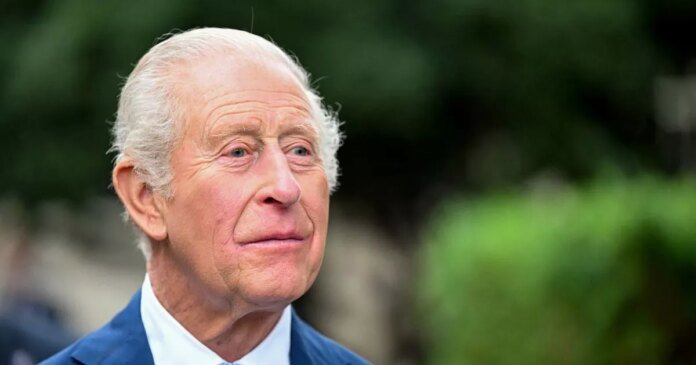
King Charles is set to visit the inaugural memorial honoring LGBT armed forces members today at the National Memorial Arboretum in Staffordshire. The unveiling ceremony of a bronze sculpture named “An Opened Letter” commemorates the impact of the UK military’s historical ‘gay ban,’ which criminalized homosexuality within the forces until 2000, resulting in the persecution, dismissal, or involuntary outing of around 20,000 armed forces individuals.
The sculpture, designed in the form of an opened letter, symbolizes the personal letters that were weaponized to discredit and incriminate serving personnel, leading to their prosecution and imprisonment in some instances. The initiative to establish this enduring memorial for the LGBT community was spearheaded by Fighting with Pride, an LGBT Armed Forces charity.
Peter Gibson, the CEO of the charity, expressed the significance of the new memorial in rectifying past injustices faced by former military members. He emphasized the emotional impact of the sculpture, highlighting the importance of acknowledging and preventing similar discriminatory practices from reoccurring in the future. Claire Aston, a former Army Royal Artillery member, shared her profound experience of finally finding closure through the LGBT+ memorial, reflecting on the enduring psychological scars of her forced discharge in 1972.
The memorial, crafted by Norfolk-based artist collective Abraxas Academy, was chosen through a design competition, outshining 38 other submissions. Apart from serving personnel and their families, the memorial stands as a permanent site for reflection and remembrance for current and future LGBT+ military members.
In addressing the historical injustice, Lord Etherington condemned the ‘gay ban’ scandal as a dark mark on the Armed Forces’ esteemed history. Former Prime Minister Rishi Sunak issued an official apology to those affected by the discriminatory policy, with compensation initiatives established for individuals who suffered repercussions.
Sharing his personal account, Carl Austin-Behan, a former RAF member, recalled the secrecy and discrimination he faced before being discharged for his sexuality. He expressed hope that the LGBT+ armed forces memorial would spark crucial conversations on the dangers of discrimination within society.
The establishment of the UK’s first LGBT+ armed forces memorial signifies a significant step towards acknowledging past injustices and fostering inclusivity within the military.

