
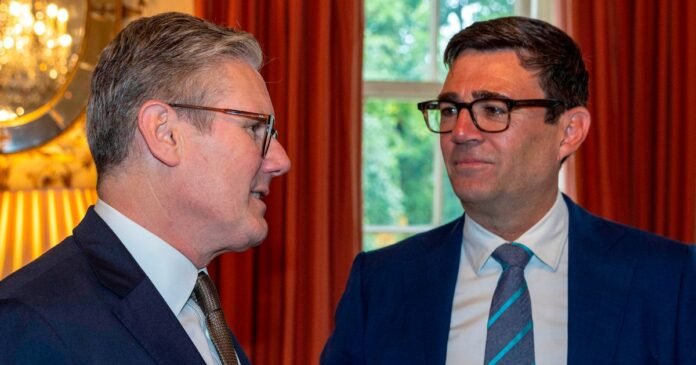
Andy Burnham has urged Keir Starmer to eliminate the two-child benefit limit, stating that the policy lacks a moral justification to persist. The government is contemplating the removal or reduction of the Conservative-era policy, which has been criticized for ensnaring hundreds of thousands of children in poverty.
Burnham, the Mayor of Greater Manchester, and Steve Rotheram, the Mayor of Liverpool City Region, have advocated for adopting Gordon Brown’s suggestion. Brown, the former Labour Prime Minister, proposed increasing gambling taxes at the Budget to generate funds for addressing high levels of child poverty.
Speaking at an event with The Mirror’s Real Britain columnist Ros-Wynne Jones, Burnham appealed for the removal of the two-child benefit cap, emphasizing that it would alleviate poverty for many children in London, Liverpool, and Manchester. He recommended implementing the change through a gambling tax or a wealth tax as a viable solution.
Burnham argued that eliminating the policy would uplift morale within the party, emphasizing that there is no ethical basis for its continuation. He criticized Labour’s decision to reprimand seven MPs who opposed the party on the two-child benefit limit.
According to the Institute for Fiscal Studies (IFS), abolishing the policy, which restricts Child Tax Credits and Universal Credit to the first two children in a family, could lift 630,000 children out of poverty in the long run. The government is expected to release the results of its child poverty review, including considerations on the policy, later this year.
Rotheram expressed admiration for Mayor Sadiq Khan’s provision of free school meals in London, acknowledging the financial challenges in replicating the initiative due to limited revenue-raising capabilities.
Burnham also urged Labour to prioritize addressing the cost-of-living crisis and reducing people’s expenses, suggesting interventions to lower various bills, transport fares, and council tax to alleviate financial burdens on individuals facing challenges in meeting their daily needs.

