
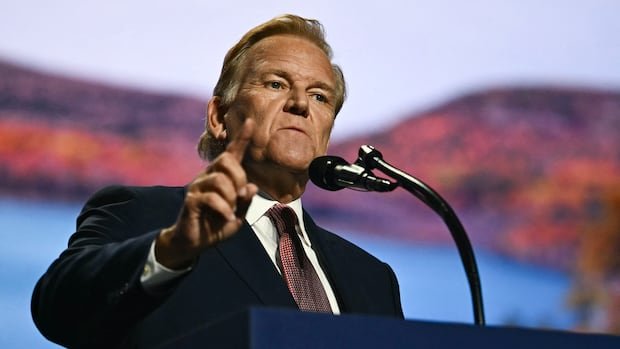
Michigan’s open Senate seat has become the battleground for the Republican candidate, who is urging President Donald Trump to halt the ongoing trade dispute with Canada. Mike Rogers, in a new 30-second advertisement, criticized the tariffs while seated in a sports bar with a Labatt beer, a popular Canadian brand in border states like Michigan. Rogers emphasized the importance of ending the tariff war, stating, “Canada is not our enemy, and we must cease this trade conflict immediately.” As an image of the Ambassador Bridge connecting Windsor and Detroit appeared on screen, Rogers pledged to unite both political parties to reduce prices for the citizens.
During a press briefing in the Oval Office, President Trump downplayed Rogers’s ad, interpreting it as a call for Canada to negotiate. Trump emphasized previous trade imbalances, stating that Canada had taken advantage of the U.S. for years and needed to rectify the situation. This marks a significant shift for Rogers, who had previously supported Trump’s tariffs on Canadian goods. In a previous Fox News interview, Rogers had praised Trump’s trade strategy as beneficial for the U.S., expressing concerns about Canadian car exports undercutting domestic manufacturers.
Rogers, a close ally of Trump, had received the president’s endorsement earlier, expressing enthusiasm for the collaboration’s potential to revitalize Michigan. However, recent polls indicate growing discontent with Trump’s tariff policies, with only a minority of Americans supporting the imposition of tariffs on Canadian products. Rogers now finds himself trailing his Democratic opponent, Abdul El-Sayed, in various surveys, prompting criticism for his apparent policy reversal.
The intertwined nature of the Canadian and U.S. auto industries underscores the complexity of the trade relationship. Contrary to Rogers’s assertions, Canada plays a crucial role in supplying components for American assembly plants, facilitating a competitive North American auto market. Moreover, Canada represents a significant market for U.S.-made vehicles, particularly those from states like Michigan, Indiana, and Texas. Despite claims that Trump’s tariffs would boost industrial employment, data shows a decline in manufacturing jobs since the beginning of his second term.
In conclusion, the evolving dynamics of the U.S.-Canada trade relationship, particularly in the auto industry, reflect the intricate economic ties between the two countries. As political rhetoric intensifies, the implications of trade policies on job markets and consumer interests remain a subject of debate and scrutiny.

