
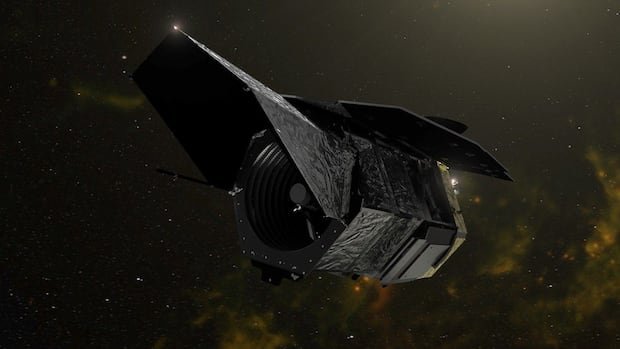
If all goes as planned, a new space telescope is set to launch from Cape Canaveral, Florida, atop a Falcon Heavy rocket at 7:26 a.m. on Sunday morning. The highly anticipated Nancy Grace Roman Space Telescope, named after NASA’s first chief astronomer, is poised to bring forth new revelations about the universe. This telescope will orbit 1.5 million kilometers away at the L2 point, where gravitational forces maintain a stable orbit. The mission is scheduled for five years with the potential for an extension.
The Nancy Grace Roman Space Telescope offers unique capabilities compared to existing telescopes like the Hubble Space Telescope or the James Webb Space Telescope. With a 2.4-meter mirror similar to Hubble’s, it also features a coronagraph to block starlight and unveil planets around distant stars. Additionally, it boasts a Wide Field Instrument with imaging capabilities 100 times larger than Hubble, enabling the observation of billions of stars for various sky and stellar surveys.
One key aspect that sets Nancy Grace Roman apart is its ability to search for exoplanets. By using methods such as the transit method and microlensing, astronomers aim to discover more about planetary systems beyond our own. The telescope’s extensive reach will allow for the observation of a vast number of stars and potential exoplanets, offering unprecedented insights into the universe.
Furthermore, the mission will delve into the mysteries of dark matter and dark energy, which constitute a significant portion of the universe. By studying these elusive components within galaxies and globular clusters, scientists hope to unravel the secrets of dark matter’s role in galactic structures and dark energy’s influence on the universe’s expansion.
In essence, the Nancy Grace Roman Space Telescope represents a groundbreaking endeavor that promises to unveil new cosmic wonders and deepen our understanding of the universe’s intricacies.

