
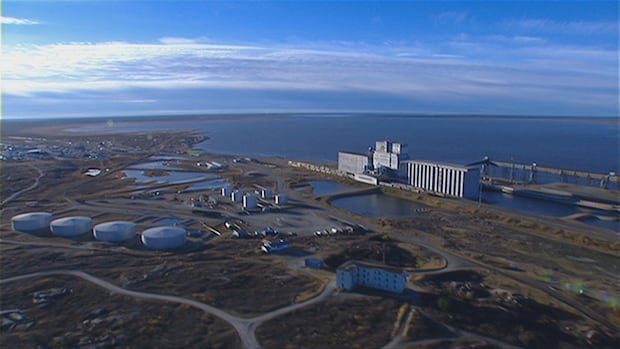
Year-round shipping on Hudson Bay without the need for expensive icebreakers is feasible, according to a spokesperson for Premier Wab Kinew. Amy Tuckett-McGimpsey revealed on Thursday that studies exploring the extension of the shipping season as part of the Port of Churchill expansion initiative have shown promising outcomes.
The Manitoba government is set to disclose the findings of these studies on Friday. The Arctic Gateway Group, in collaboration with shipping company Fednav, conducted a study to determine the requirements for enabling year-round shipping at the Port of Churchill. Additionally, a study commissioned by the provincial and federal governments through the Arctic Research Foundation, led by former Blackberry chair Jim Balsillie, is expected to be completed by March 2027.
Rebecca Widdicombe, a spokesperson for Kinew, mentioned that while the Fednav study has been finalized, the Arctic Research Foundation study’s results are pending. The premier intends to unveil details from both studies ahead of a summit in Toronto in September, where he aims to attract international investors for the Port of Churchill expansion project.
Kinew indicated in an interview with the Globe and Mail that the studies suggest a reduction in sea ice will allow for the use of icebreakers costing between $50 million to $100 million, rather than the more expensive multibillion-dollar vessels, to facilitate navigation in Hudson Bay.
The proposed expansion of the Port of Churchill encompasses various elements, including the reconstruction of the Hudson Bay Railway to accommodate larger payloads and enhancements to storage and loading facilities at the port. The Arctic Gateway Group, comprising 29 First Nations and 12 remote northern Manitoba communities, is exploring the potential for shipping commodities through Hudson Bay earlier and later in the season, utilizing icebreakers and ice-hardened tugboats.
Moreover, Kinew has floated the idea of constructing a natural gas or oil pipeline to Churchill and establishing a year-round access road to the community. Earlier assessments questioned the feasibility of such ventures, with a 2023 study by consulting firm PwC highlighting short-term opportunities for increased shipping through the Port of Churchill but expressing reservations about more extensive investments in a northern Manitoba trade corridor.
The study identified opportunities to export nickel, silica sand, and grain through the port, as well as the potential for transporting potash with additional investment in port and railway infrastructure. However, it noted limited market potential for shipping crude oil, natural gas, or hydrogen through Hudson Bay. Climate change is expected to impact the region, leading to extended ice-free seasons but also posing challenges such as unpredictable navigation due to ice jams and severe storms.
Concerns were raised about the environmental impact and community well-being in response to potential industrial developments at Churchill, with significant opposition to activities involving oil transportation through the port. Despite the varying viewpoints, Arctic Gateway CEO Chris Avery emphasized the importance of building a resilient business at the port in light of evolving circumstances.
In 2025, the federal government recognized the Port of Churchill expansion as “nationally significant infrastructure” but did not grant it approval as a major national project.

