
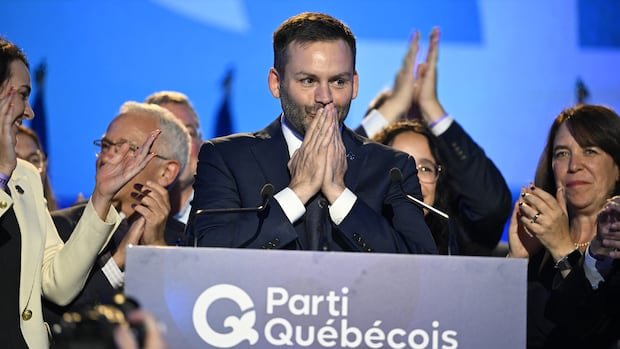
Quebecers have chosen a pro-sovereignty government, despite most not supporting a separatist referendum, marking a shift from the 2014 scenario. Unlike the past, when the Parti Québécois (PQ) under Pauline Marois faced uncertainty regarding a potential referendum after forming a minority government, the current leader, Paul St-Pierre Plamondon, has long advocated for a referendum within the first four years of a PQ term. The recent election saw the PQ securing a minority government, overcoming Quebec’s historical political divide and affirming the party’s purpose.
In his victory speech at the PQ headquarters in Montreal, St-Pierre Plamondon emphasized the importance of Quebecers having their own country for the recognition and justice they deserve. Despite polls showing low interest in sovereignty among Quebecers, the PQ’s electoral success was notable, with the party forming a minority government despite only securing 28% of the popular vote, prompting discussions on electoral reform.
The election highlighted a desire for change, overshadowing concerns about a referendum, as voters rejected the incumbent Coalition Avenir Québec (CAQ) after eight years in power. The CAQ faced a significant defeat, losing all seats in the National Assembly, while attempts to use sovereignty as a wedge issue proved ineffective. The PQ’s victory, coupled with the collapse of the CAQ, benefited opposition parties like the Conservatives, who made substantial gains, particularly in the Quebec City region.
Despite the PQ’s victory, the likelihood of a sovereignty referendum remains uncertain, with a potential vote pushed to 2029 or 2030. St-Pierre Plamondon will need to collaborate with other parties, notably the Liberals and the Conservatives, to advance any referendum-related legislation due to the PQ’s narrow mandate. The election outcome also raises questions about electoral system reform, a promise that St-Pierre Plamondon, as the new premier, may need to address, following in the footsteps of leaders like François Legault.

