
Canada’s chief police officer has informed Indigenous leaders in Alberta that the Royal Canadian Mounted Police (RCMP) will reassess the chiefs’ request for a criminal treason probe into the provincial premier and ruling party, a development that has instilled optimism among some chiefs.
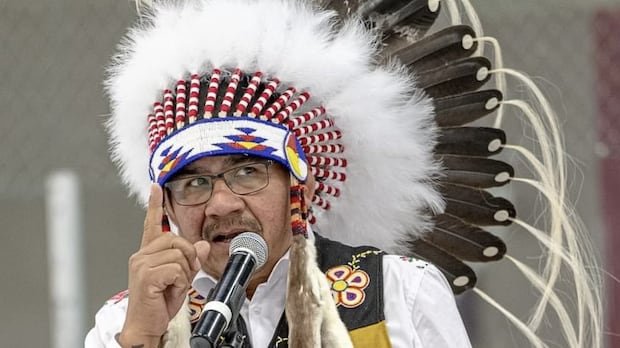
Chief Desmond Bull of the Louis Bull Tribe in Maskwacis, who compiled the case for the accusation, expressed, “It’s a step forward towards our goal in bringing this matter to light.” Sturgeon Lake Cree Nation Chief Sheldon Sunshine, in a separate statement, added, “They will assess the information to decide if it warrants an investigation, so I am hopeful.”
The Assembly of Treaty Chiefs, representing 48 First Nations in Alberta under Treaty 6, Treaty 7, and Treaty 8, unanimously passed a resolution on June 16 urging the RCMP and auditor general to probe whether Premier Danielle Smith and other United Conservative Party members have committed treason under Section 46 of the Criminal Code.
Premier Smith has announced an October 19 referendum for Albertans to vote on staying in Canada or initiating a second binding referendum on separation. The Alberta government asserts that the referendum offers a respectful and democratic platform for citizens to voice and discuss legitimate concerns about federal policies and decisions.
Treason, as per the Criminal Code, involves using force to overthrow the government or sharing information with another state that could harm Canada’s safety or defense.
Following the resolution’s approval, the assembly forwarded it to the RCMP, which responded a month later in a letter obtained by CBC Indigenous this week. RCMP Commissioner Mike Duheme wrote on July 17 to the leaders of Treaty 6, 7, and 8 and the Blackfoot Confederacy, copying provincial and federal attorneys general Mickey Amery and Sean Fraser.
Duheme stated, “If the necessary criteria for a formal criminal investigation are met, any investigative actions taken will be conducted thoroughly and objectively, in line with RCMP policy.” Fraser’s office refrained from commenting, and the Justice Department deferred to the RCMP. Amery’s office directed inquiries to Alberta’s Ministry of Indigenous Relations, awaiting a response.
In a statement from RCMP headquarters in Ottawa on Friday, it was emphasized that assessments are impartial and based on facts, law, and available evidence. The RCMP noted it does not disclose details of private correspondence unless criminal charges are filed.
The chiefs accuse Smith and the UCP of promoting separatism, breaching treaties, risking foreign interference, and failing to consult adequately with Indigenous groups. Despite Smith’s declaration to vote for Alberta’s unity with Canada, the chiefs remain critical of her actions.
Sunshine remarked, “Even though she’s changing her position and appearing as a patriotic figure, the actions undertaken are undermining their position within the Confederation.” Bull expressed satisfaction with the RCMP’s response and urged for tangible progress. Indigenous communities are encouraging their members to participate in the upcoming referendum.
Bull criticized the premier’s earlier dismissal of the treason accusation and reiterated the chiefs’ dedication to their cause. Sunshine believes the RCMP is treating the situation seriously, acknowledging the complexities surrounding the separation referendum and associated risks.

