
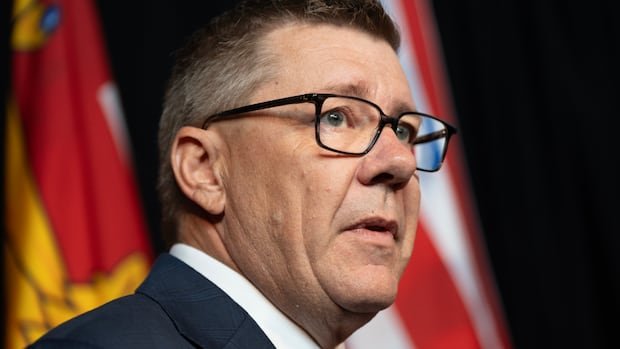
Saskatchewan Premier Scott Moe expressed his lack of surprise at U.S. President Donald Trump’s recent reaffirmation of using Canadian potash, despite mentioning the possibility of importing significant amounts from Belarus. During an interview with CBC’s Power & Politics, Moe deemed the notion of sourcing potash from Belarus as unrealistic, citing that the country primarily directs its potash eastward rather than to the Western world.
Trump’s social media announcement on Monday hinted at a potential deal with Belarus for potash at considerably lower prices than those offered by Canada. However, industry experts like Josh Linville from StoneX have raised doubts about the viability of Belarusian potash significantly impacting U.S. agricultural supplies or prices. Linville emphasized the surplus availability of potash and the more pressing need for phosphate and nitrogen in the U.S. farming sector.
At the United Nations General Assembly in New York on Tuesday, Trump seemed to backtrack from his initial stance, mentioning that while Belarus offers lower prices, the U.S. will continue to source potash from Canada. Potash, a crucial component in fertilizers, predominantly comes from Canada, with Saskatchewan hosting all of the country’s potash mines.
Moe emphasized the ethical and economic superiority of Saskatchewan’s potash industry compared to other global exporters, particularly labeling Belarusian potash as “blood potash” due to its alleged support for Russian aggression in Ukraine. He reiterated these concerns during the interview, criticizing Trump’s remarks as neither practical nor ethical.
The premier reasoned that Saskatchewan provides a reliable and expanding potash supply with established infrastructure, making it the logical choice for business dealings. While declining to speculate on Trump’s motives, Moe hinted at potential political pressures from Midwestern agricultural states in light of the upcoming U.S. midterm elections. Trump had initially framed the potential Belarus deal as beneficial for American farmers and ranchers in his social media posts.

