
In Lafayette, Louisiana, Barbara Dejean and Stephanie Simon at the Diocese of Lafayette’s archive were alerted to changes in Canada’s citizenship regulations through an online news piece last December. Following this, they were inundated with inquiries from Americans seeking to verify their Canadian lineage for the purpose of obtaining Canadian citizenship certificates under the new rules. Simon, an associate archivist, disclosed that they are currently grappling with a backlog of over 450 pending requests, a significant increase since the implementation of Bill C-3 on December 15, 2025. The processing time for these requests has extended to 12 to 16 weeks compared to the previous turnaround of two to three days.
This surge in citizenship claims is not unique to Lafayette, as archives across the United States are also experiencing a similar trend due to Bill C-3. The legislation allows individuals to claim Canadian citizenship if they can prove descent from a Canadian ancestor, even if it spans several generations. The appeal of this opportunity is particularly high among Americans, with over 6,600 individuals receiving Canadian citizenship certificates between December 15, 2025, and June 30, 2026. Notably, more than half of these new Canadian citizens (3,510 people) were born in the United States.
Despite the benefits of obtaining Canadian citizenship, the application backlog has surged to 136,000, with an estimated processing time of 33 months. This spike in demand has caught authorities off guard, as initial projections indicated much lower application volumes. The broad eligibility criteria under Bill C-3 have led to a diverse pool of applicants, including those tracing back their ancestry over a century to Canadian immigrants who crossed into the U.S. seeking employment opportunities.
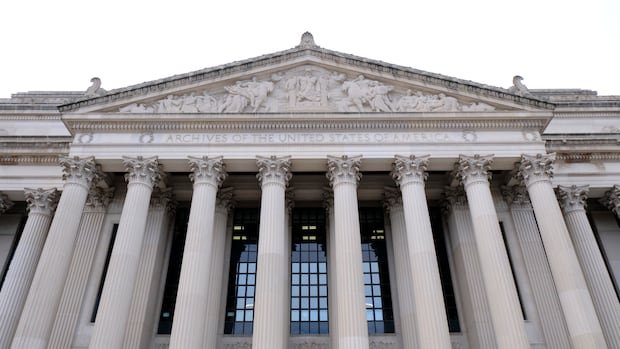
Acknowledging the strain on smaller archives, such as the Diocese of Belleville in southern Illinois, where archivists have seen a rise in requests related to Canadian ancestry documents. The increased workload has prompted adjustments in working hours and fees to manage the influx of inquiries effectively. Similarly, larger archives like the U.S. National Archives and Records Administration have reported a rise in requests for documents supporting dual citizenship applications under Bill C-3, creating a backlog and prolonged processing times for archivists.
The impact of Bill C-3 is also felt by organizations like the American French Genealogical Society in Rhode Island, where volunteers are working tirelessly to address a backlog of approximately 150 requests since the legislation’s enactment. Despite facing challenges with limited resources and operating hours, the society remains dedicated to assisting individuals in researching their French-Canadian heritage.

