
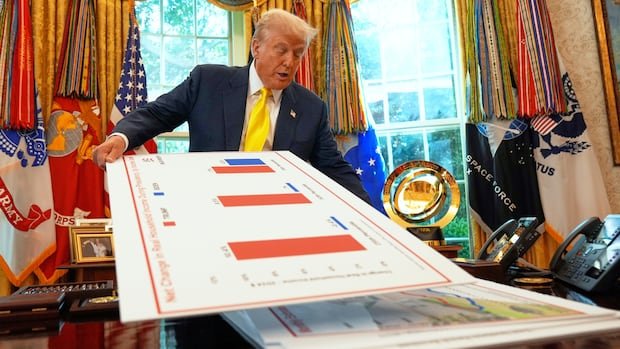
In March 2025, during his state of the union address, U.S. President Donald Trump expressed optimism about generating significant revenue and creating unprecedented job opportunities through tariffs. However, despite his earlier claims on Twitter in 2018 about reducing national debt and cutting taxes, the promised economic boom has yet to materialize.
Currently, the U.S. government debt has surpassed $40 trillion, triggering concerns in the bond market and maintaining high yields and interest rates. While tariffs have led to challenges and financial strains for some, they have proven to be lucrative for certain sectors.
Economists note that one significant outcome of tariffs in the U.S. has been a substantial wealth shift from lower and middle-class individuals to affluent corporations and well-connected entities. This aligns with the broader economic agenda of the Trump administration and the Republican Party, which has leveraged tax policies to serve a similar purpose.
The impact of tariffs on wealth distribution is evident, with lower-income households bearing a disproportionate burden due to the taxation of consumption. Wealthier households, on the other hand, are less affected as their spending habits involve items less impacted by tariffs. This imbalance exacerbates the transfer of wealth to the affluent.
Moreover, the system of tariff exemptions and rebates in the U.S. has further favored large corporations, with the Treasury issuing substantial refunds to businesses affected by tariffs. Major companies like Walmart and Target have received significant amounts, while smaller entities and individuals have limited access to such relief.
The preferential treatment in tariff policies, influenced by political connections, has raised concerns about fairness and transparency. The process of exemptions and refunds has often favored politically connected corporations over smaller businesses and individuals, amplifying the wealth concentration effect of tariffs.
Despite assurances from corporations about passing on refunds to consumers, economists remain skeptical about the benefits trickling down to the general public. Studies indicate that consumers bear the brunt of tariff costs, with minimal relief reaching them.
In conclusion, the impact of tariffs in the U.S. has not only failed to deliver the promised economic revival but has also exacerbated wealth inequality and raised questions about the fairness and effectiveness of the current tariff regime.

