
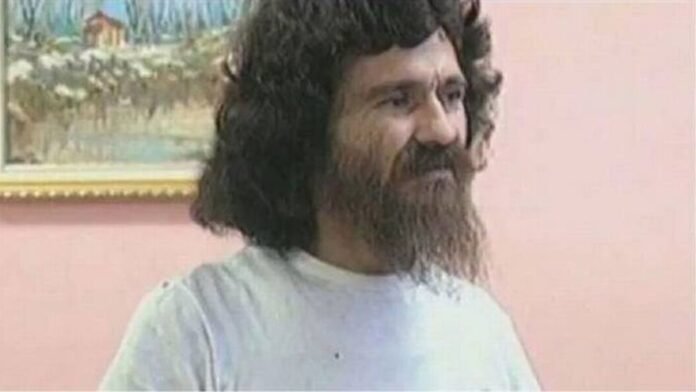
José Dorángel Vargas Gomez, also known as Dorángel Vargas or the infamous “People Eater,” is a prominent figure in Venezuela’s criminal landscape.
His narrative spans from a challenging upbringing in rural Mérida to gruesome killings on the streets, culminating in a shocking prison uprising that resulted in fatalities and reportedly involved cannibalism.
Born on May 14, 1957, in the modest village of Caño Zancudo, Mérida, Vargas was raised in a family of impoverished farmers. His parents were affiliated with the Venezuelan Liberation Forces, patrolling the borderlands alongside guerrillas. Locals later claimed that Vargas exhibited signs of being “possessed by evil spirits” from a young age. He had limited formal education, attending school only until the sixth grade.
As a young adult, Vargas distanced himself from his family and led a transient lifestyle. He engaged in petty criminal activities like theft of poultry and livestock, establishing a pattern of opportunistic offenses.
In 1995, Vargas had a significant run-in with the law when he murdered another transient, Baltazar Cruz Moreno, and consumed his remains.
Subsequent to this incident, Vargas was admitted to the Peribeca Psychiatric Rehabilitation Institute, where he underwent two years of treatment. Despite being diagnosed with paranoid schizophrenia, he was eventually released, despite concerns regarding his violent tendencies.
By the late 1990s, Vargas had returned to the streets, this time in San Cristóbal, Táchira state. Between November 1998 and January 1999, he embarked on a series of killings along the Torbes River and in Parque 12 de Febrero.
His victims were typically healthy men, including laborers, athletes, and occasional drunkards. Vargas used various tools such as a metal tube resembling a spear or rocks to bludgeon them to death. He purportedly adhered to personal guidelines regarding the “quality” of flesh, avoiding women, children, the elderly, and overweight men.
After dispatching his victims, Vargas dismembered their bodies, consuming some parts, cooking or storing others, and disposing of the rest. The preferred cuts were muscles from the thighs and calves, with occasional use of tongues in stews or inclusion of eyes in soup. Hands, feet, noses, and ears were reportedly off-limits.
The extent of his crimes came to light in February 1999 when remains of two young men were discovered near a park by civil defense members. Subsequent investigations uncovered six more bodies, vessels containing human flesh and organs, as well as severed heads, hands, and feet in a dwelling where Vargas had been residing. He confessed to slaying and eating at least ten men during this period.
Following his apprehension, Vargas gained national notoriety. Media outlets dubbed him “The Hannibal Lecter of the Andes,” drawing parallels to the fictional cannibal character.
Psychological assessments indicated that Vargas suffered from paranoid schizophrenia with psychopathic inclinations, rendering him legally non-accountable under Venezuela’s legal system. Lacking a suitable long-term psychiatric facility, Vargas was confined in a secure prison in Táchira, isolated to thwart further violent acts.
Despite being incarcerated, Vargas’s propensity for violence remained evident. In October 2016, a month-long disturbance at the Táchira Detention Center in San Cristóbal escalated into a riot. The overcrowded facility, allegedly under gang control, contained an abundance of weapons and drugs, with suspicions of complicity among certain officials.
Amid the chaos, two inmates, Juan Carlos Herrera Jr., 25, and Anthony Correa, met gruesome fates. Reports from families suggested the men were stabbed, hanged to bleed, dismembered, and shockingly, portions of their bodies were fed to other prisoners. Witnesses and investigations hinted that Vargas, notorious for his cannibalistic past, was enlisted by a gang to perform these mutilations. Some inmates purportedly consumed the flesh unknowingly, while others were coerced. Those who resisted participation faced severe consequences.
While the government acknowledged the deaths, it refrained from officially endorsing the cannibalism allegations, emphasizing the need for scientific validation in investigations. Nevertheless, testimonies from inmates and families lent credence to the chilling accusations.
Presently, Vargas remains secluded in Táchira, under close surveillance due to his erratic and violent conduct.
Unabashed about his deeds, Vargas has openly discussed his crimes, confessing in interviews: “I used to eat the thighs, not the nose, ears, or hands because they are too hard. If I saw a drunkard sleeping, I would kill him with my spear, cut his head off and feel happy.”
“I want to go back there and dig a big hole to bury them. I don’t feel ashamed of anything. They have put me in this jail for nothing

