
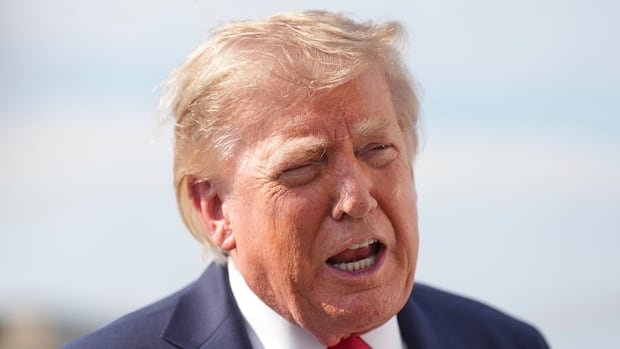
U.S. President Donald Trump has claimed that Canada seeks the advantages of being a U.S. state without actually becoming one. Trump made these remarks in a brief post on his Truth Social platform early on Sunday following the breakdown of trade discussions between the two countries, coinciding with the implementation of new U.S. tariffs.
Accusing Canada of imposing significant tariffs on American farmers over the years, Trump emphasized in his post that this practice must come to an end. The Canadian government has not yet responded to Trump’s comments, despite his consistent statements since his second term began in 2025 about wanting Canada to become the 51st U.S. state.
Following unsuccessful negotiations aimed at striking a trade deal, a 50% tariff on various Canadian products was introduced on Saturday. Prime Minister Mark Carney expressed that the U.S. administration’s demands during the talks were deemed unacceptable by Canadian negotiators, particularly restrictions on Canada’s ability to engage in trade agreements with other nations. Carney revealed plans to reciprocate with dollar-for-dollar tariffs on U.S. goods starting September 8.
Under the newly enforced U.S. policy, a 50% tariff will be imposed on a wide array of Canadian goods valued at over $28 billion, including items like plywood, cement, wine, and hockey sticks. The trade agreement was expected to lead to reduced U.S. tariffs on Canadian aluminum, steel, and automobile sectors.
Various provincial and territorial premiers have supported Carney’s decision to walk away from the negotiations. Ontario Premier Doug Ford, for instance, commended the prime minister for not signing the pact, labeling it a disadvantageous deal that needed to be countered with reciprocal tariffs.
U.S. Trade Representative Jamieson Greer asserted that there are no plans for further discussions with Canada. Greer emphasized the U.S.’s interest in safeguarding American workers and supply chains, highlighting proposed reductions in tariffs on steel, automobiles, and lumber that Canada allegedly declined.
In response to the escalating trade dispute, a communication and public policy expert at St. Thomas University in New Brunswick, Jamie Gillies, noted that Canadians are not inclined to be bullied by the U.S. administration. Despite the ongoing tensions, Gillies expressed hope for a potential return to negotiations, suggesting room for compromise before the retaliatory tariffs take effect in September. Gillies also highlighted the political implications of the trade dispute in the lead-up to the midterm elections in November.
Overall, the trade tensions between the U.S. and Canada continue to escalate, with both sides standing firm on their respective positions as discussions remain at a standstill.

