
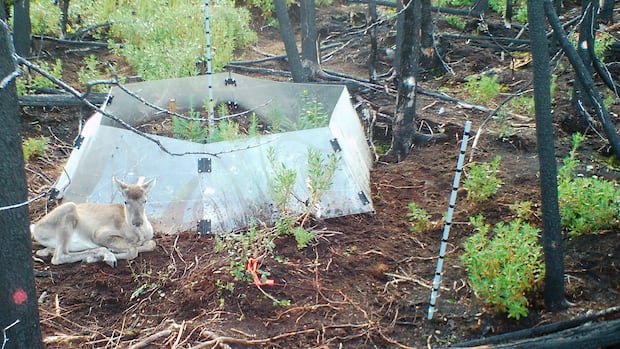
Lucas Brehaut, a wildfire researcher, is facing unexpected challenges in his study on forest regeneration in Atlantic Canada post-wildfires. His research involves setting up open-top chambers (OTCs) to simulate the effects of climate change on forest growth. However, various wildlife species, including caribou, moose, black bears, rabbits, coyotes, and owls, have been disrupting his work by damaging the equipment and even stealing temperature sensors.
Despite encountering setbacks caused by the animals, Brehaut remains understanding and acknowledges that these creatures are simply exploring their habitat. He expresses a sense of disappointment but emphasizes the importance of coexisting with wildlife in their natural environment.
Kaitlyn Gaynor, an assistant professor at the University of British Columbia, explains that animals’ curiosity towards unfamiliar objects is natural, driven by the possibility of new food sources or potential threats. She notes that human scent left on equipment can attract animals, leading to interference with research activities.
Animal interference in research projects is a common global issue, with incidents documented in various regions such as Mozambique, where animals like baboons, hyenas, and elephants have disrupted research equipment. Gaynor highlights that animal interference is a significant factor contributing to equipment loss in research projects.
In addition to wildlife disruptions, Brehaut mentions human-related incidents affecting his research, such as snowmobiles damaging his study sites during snowy winters in Newfoundland. Despite these challenges, researchers like Brehaut are committed to advancing their studies while navigating the complexities of sharing space with wildlife.

