
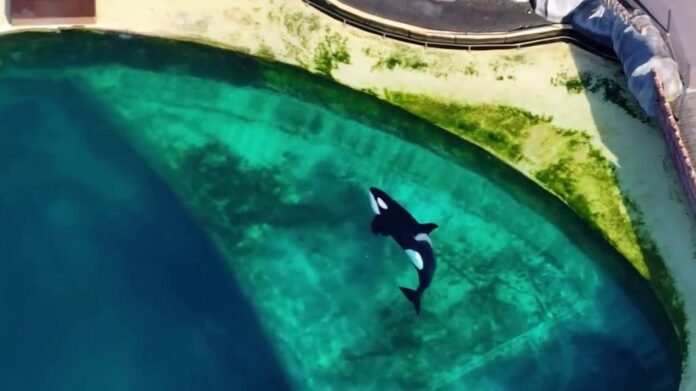
New distressing footage has surfaced, seemingly depicting the lifeless bodies of two orcas floating in a deteriorating tank. However, the reality is even more heart-wrenching.
At the start of the year, in anticipation of new laws prohibiting orcas from participating in performances, the French marine park Marineland of Antibes shut its doors to visitors. Despite the emptiness, a mother and son pair named Wikie and Keijo have been left neglected in desolate conditions for almost a year.
A drone video captured by photojournalist Seph Lawless has unveiled the tragic plight of these magnificent creatures, moving many viewers to tears. Initially assuming the orcas were deceased, Seph’s Instagram post revealed a surprising twist. The mother orca, thought to be lifeless, suddenly showed signs of life, engaging with the drone and exuding a sense of relief and curiosity.
In a touching display, the orcas began performing, reminiscing about their show days, but this time, there was no audience except for Seph. The video has gained immense traction, prompting action from the French government following public outcry.
Despite most animals being relocated from the abandoned park, Wikie, aged 23, and Keijo, aged 11, along with 12 bottlenose dolphins, remain in a state of uncertainty. Tragically, previous incidents of deaths among the orcas in the park have raised concerns about the well-being of Wikie and Keijo.
Efforts to transfer the orcas to alternative facilities have faced obstacles, leaving their future uncertain. The deteriorating conditions of their enclosure, as highlighted by environmentalists, pose a significant threat to their health and well-being. The ongoing debate on the captivity of orcas underscores the ethical concerns surrounding their treatment and the challenges of potential relocations.
The story of Wikie and Keijo serves as a poignant reminder of the complex issues surrounding captive marine animals and the urgent need for conservation efforts to ensure their welfare.

