
About 2,000 evacuees from various parts of northwestern Ontario have made their way back home following a surge of wildfire incidents in mid-July. However, as of Friday, approximately 829 individuals are still displaced, as confirmed by officials from Ontario’s Ministry of Emergency Preparedness and Response.
The recent wildfires led to the evacuation of over a dozen communities in the area, predominantly inhabited by First Nations peoples. Tragically, two communities, Namaygoosisagagun First Nation (also known as Collins First Nation) and Whitewater Lake First Nation, suffered complete devastation.
As the wildfire threats subsided in most regions, Kiashke Zaaging Anishinaabek (Gull Bay First Nation) terminated its state of emergency from mid-July on Wednesday, urging evacuees to return home. Chief Wilfred King of Gull Bay criticized the Ontario government for revoking wildfire implementation and evacuation orders around the community, emphasizing the continued risk to members and infrastructure.
Despite King’s initial concerns about lingering forest fire dangers, he, along with two band councillors, surveyed the situation via helicopter on Tuesday morning. King expressed confidence in the improved conditions after observing minimal fire activity and smoke in the area.
Nevertheless, King persists in advocating for a public inquiry into the province’s wildfire response due to perceived communication gaps with First Nation leaders and inadequate emergency readiness measures. He stressed the importance of addressing unresolved issues from a month ago.
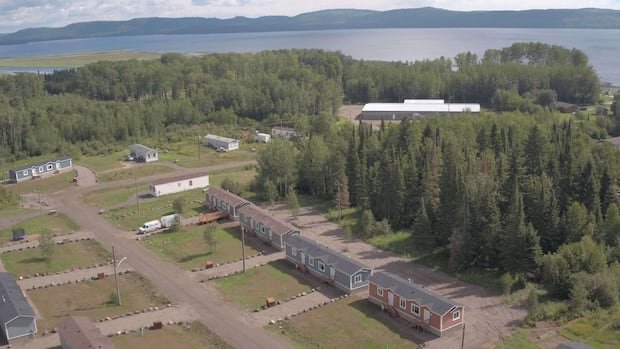
Located approximately 215 kilometers north of Thunder Bay, Gull Bay First Nation is a community of around 370 residents. While road access to Gull Bay has been restored, sections of Highway 527 between Kopka River and Armstrong, as well as a significant portion of Highway 811, remain closed due to nearby wildfires.
The province of Ontario is currently grappling with nearly 140 active wildfires, predominantly concentrated in the northwest. Notable fires near Gull Bay First Nation include Thunder Bay 36, the largest uncontrolled wildfire in Ontario at over 301,000 hectares, along with Dryden 34 and Dryden 35. These three fires, collectively known as the Rinker Lake Complex, remain uncontained.
Fire suppression efforts across the Rinker Lake Wildland Fire Complex are ongoing, with assistance from FireRanger crews from Manitoba, Nova Scotia, and Ontario. Additionally, around 60 firefighters from Mexico are expected to join the efforts, augmenting the capacity to combat the wildfires.
While the wildfire hazards vary from low to high across the region, with high-risk areas concentrated in the Kenora and Dryden fire management sectors, the majority of evacuees from Gull Bay have safely returned home. Chief King expressed satisfaction that there were no injuries or property damage during the evacuation process.
Despite the return of most evacuees, King emphasized the need for continued vigilance as the official wildfire season persists until October 31. He assured that if evacuation becomes necessary again, the community is prepared to act swiftly.

