
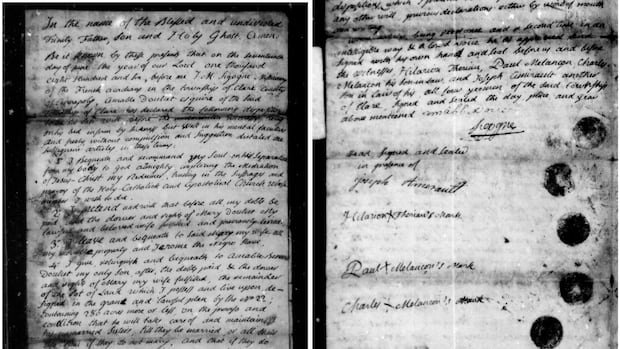
In the 19th century, Hilarion Thériault, a 71-year-old Acadian, made a will, a rare act among Acadians of that era due to limited property ownership following the Acadian deportation. Thériault, determined not to pass away unprepared, prioritized settling debts, seeking reparations, and ensuring peace for his family in his will.
Researcher Colby Gaudet delved into 24 wills, including Thériault’s, from the small Acadian community of Clare, N.S., shedding light on how these families navigated legal and religious customs related to death. These wills, written by priest Jean-Mandé Sigogne, underscored the challenges Acadians faced, including language barriers and marginalization by Anglo-Protestant county judges.
The wills, left by community leaders like Thériault, reflected a strong Catholic influence, invoking Catholic saints and religious figures, a stark contrast to Protestant wills of the time. Moreover, the wills provided insights into the racial dynamics within the community, such as the ownership of a Black slave named Jerome and the relationships between Acadians and Black individuals like Anselm Hatfield.
Historian Maurice Basque highlighted the context of social ostracism faced by Acadians following the forced deportations in 1755, where Acadian land was seized and redistributed to settlers. Despite enduring hardships and discrimination, Acadians like Thériault remained unapologetically Catholic, emphasizing their faith in their wills as a testament to their identity and values.

