
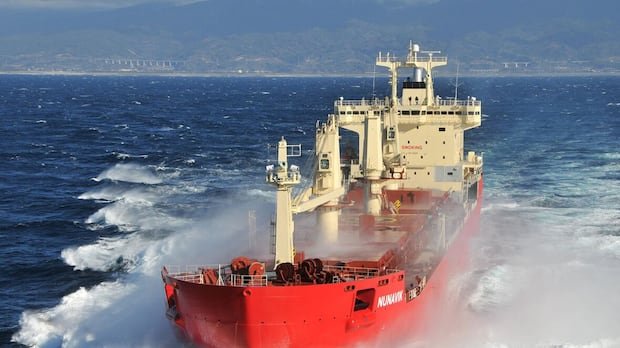
Premier Wab Kinew has revealed that the proposed expansion of the Port of Churchill, including an offshore liquefied natural gas terminal in Hudson Bay, is estimated to cost between $70 and $80 billion. Recent studies indicate that ice-hardened freighters could navigate Hudson Bay safely beyond the current four-month shipping season of the port. However, the studies also highlight the need for significant infrastructure modifications to accommodate fully laden natural gas tankers due to the shallow and narrow entrance of the existing port.
A feasibility study conducted by the Arctic Gateway Group, which owns the port and Hudson Bay Railway, emphasized the necessity of dredging, infrastructure adjustments, or the development of an offshore loading facility before deploying such vessels in Churchill. Comparatively, the construction of a liquefied natural gas terminal at Kitimat, B.C., cost $40 billion over a 12-year period and is located at the end of a protected inlet draining into the Pacific Ocean.
Despite challenges, Kinew expressed optimism following new studies supporting the feasibility of shipping liquefied natural gas through icy waters. He downplayed concerns from Indigenous communities and Arctic residents, stating that liquefied natural gas is perceived similarly to household propane. The premier highlighted the lower environmental impact in case of leaks or spills compared to oil.
Three studies recently released provide hope for extending Churchill’s shipping season, with the potential for year-round shipping using ice-hardened vessels. Kinew sees this as an opportunity to attract investors for the multibillion-dollar Port of Churchill expansion and Hudson Bay Railway upgrade. However, the reports suggest the need for continued research due to the unpredictable ice conditions in Hudson Bay.
Arctic Gateway Group, in collaboration with shipping company Fednav, explored the requirements for year-round shipping in Churchill. While the studies indicate current feasibility with ice-hardened freighters, challenges remain due to the dynamic ice environment and navigational complexities within the Hudson Bay estuary.
The cost of ice-hardened vessels suitable for Arctic conditions ranges from $100 million to $410 million, significantly less than specialized icebreakers. Additional academic research forecasts the persistence of ice in Hudson Bay under certain global warming scenarios, emphasizing the importance of ongoing assessments.
Kinew plans to present the Port of Churchill expansion to potential investors in Toronto, aiming to secure support for the comprehensive project, which includes the construction of a gas terminal and railway upgrades. Despite some skepticism, Churchill Mayor Mike Spence and Arctic Gateway Group remain optimistic about the opportunities presented by Arctic shipping developments.
The proposed expansion of the Port of Churchill involves various components beyond the gas terminal and icebreakers, with plans to enhance storage and loading facilities, rebuild the railway for increased capacity, and transform Churchill into a year-round port. The government is also exploring federal involvement and support for the project, although specific commitments are pending.
Manitoba Opposition Leader Obby Khan criticized Kinew for downplaying concerns and lacking concrete plans for the development of the Port of Churchill. He raised issues about potential disruptions to the Hudson Bay Railway due to melting permafrost, highlighting the need for realistic expectations and thorough planning in the project’s execution.

