

Concerns have been raised by privacy specialists after a bar in Winnipeg identified a woman as a nationwide public safety issue through its ID scanning system, resulting in her being barred from a Calgary Stampede venue in July.
Alexandra, a lawyer from Montreal, visited the Riverside bar in St. Vital on June 6, where her driver’s license was scanned at the entrance by a security staff member using a Patronscan ID scanner.
She reported that she was not informed about the scanning process and was unaware that an event later that night would lead to a flag that might prevent her from entering bars throughout Canada.
“This flag resulted in my being denied entry at a venue in an entirely different province without my awareness and without any clarity on how this flag was created,” Alexandra stated.
She mentioned feeling unwell while at the Winnipeg bar and quickly rushed to the nearest restroom, fearing she would be sick. After someone knocked on the door and asked her to exit, she requested a moment to regain her composure before leaving without any issues.
CBC News is using only Alexandra’s first name due to her concerns about potential professional consequences from sharing her experience.
Refused access to Calgary Stampede venue
On July 9, she attempted to enter a venue at the Calgary Stampede that utilized the same Patronscan scanner and was denied admission. The staff member operating the scanner informed Alexandra that she had a “criminal record,” which she knew to be untrue.
Believing it to be a mistake, Alexandra tried to enter the same venue the following day but was again turned away, prompting her to inquire further.
The venue employee revealed a flag linked to her ID in their system, marking her as a “public safety concern” with a “serious” severity level due to her having “entered the men’s restroom and refused to leave,” citing the Riverside as the location.
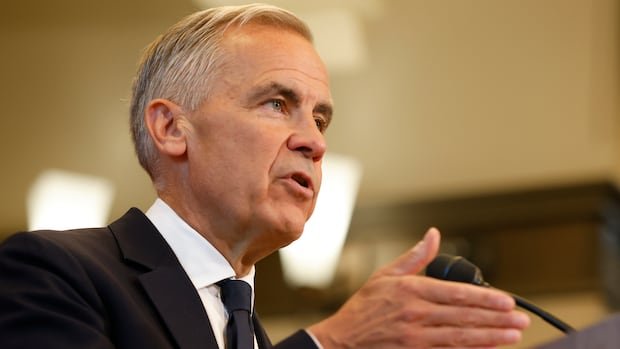
Alexandra claims she was denied access to a Calgary Stampede venue and was told she had a ‘criminal record’ following the incident at the Winnipeg bar. (James Young/CBC)
“I quickly realized this was due to data sharing; how else would a flag from a bar in Winnipeg appear at a venue in Alberta?” Alexandra remarked.
She took a snapshot of the screen displaying this information and shared it with CBC.
“I found the specific flag quite outrageous,” she said. “There are individuals who enter bars, assault others, start fights, and engage in various terrible actions.”
Flag network utilized across North America
Alexandra soon discovered that the Winnipeg bar participates in Patronscan’s flag network, a system that the Calgary-based platform employs to notify other venues about problematic patrons.
This system negates the need for calling another bar to inform them of a troublesome customer or to share incident reports with different establishments, as stated on Patronscan’s website. It is implemented across North America and globally, aiming to prevent dangerous individuals from gaining access to venues.
The manager of the Riverside said in an email to CBC News that after Alexandra reached out to the bar, they reviewed the situation and concluded it was an error, stating that it should have been an internal flag only. The external flag on her record has since been removed, according to the manager.
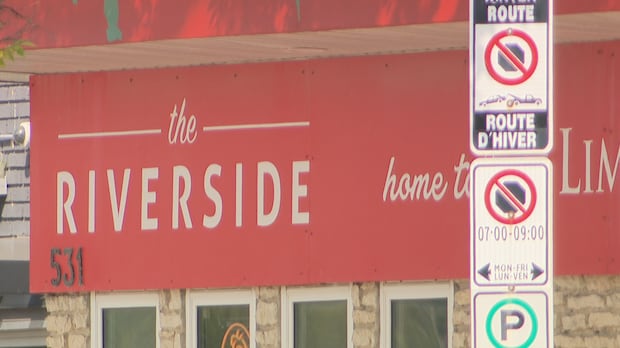
A Montreal-based lawyer was denied entry to a venue when her ID was scanned at the Calgary Stampede in July. That’s because she was flagged as a nationwide public safety concern after an incident at a Winnipeg bar in June.
Following her complaints, the bar reviewed its staff training and the procedures for flagging incidents and “when information should or should not be shared with other venues,” the manager stated.
The manager emphasized that the bar takes privacy issues seriously but noted a crucial distinction between the proper use of Patronscan for public safety and this “specific administrative error.”
Understanding data usage: experts weigh in
Experts consulted by CBC highlighted various concerns regarding the handling of individuals’ personal data when their ID is scanned at a venue.
According to federal private-sector privacy legislation, organizations must inform individuals in a “meaningful way” about the purpose for collecting, using, or disclosing their personal information.
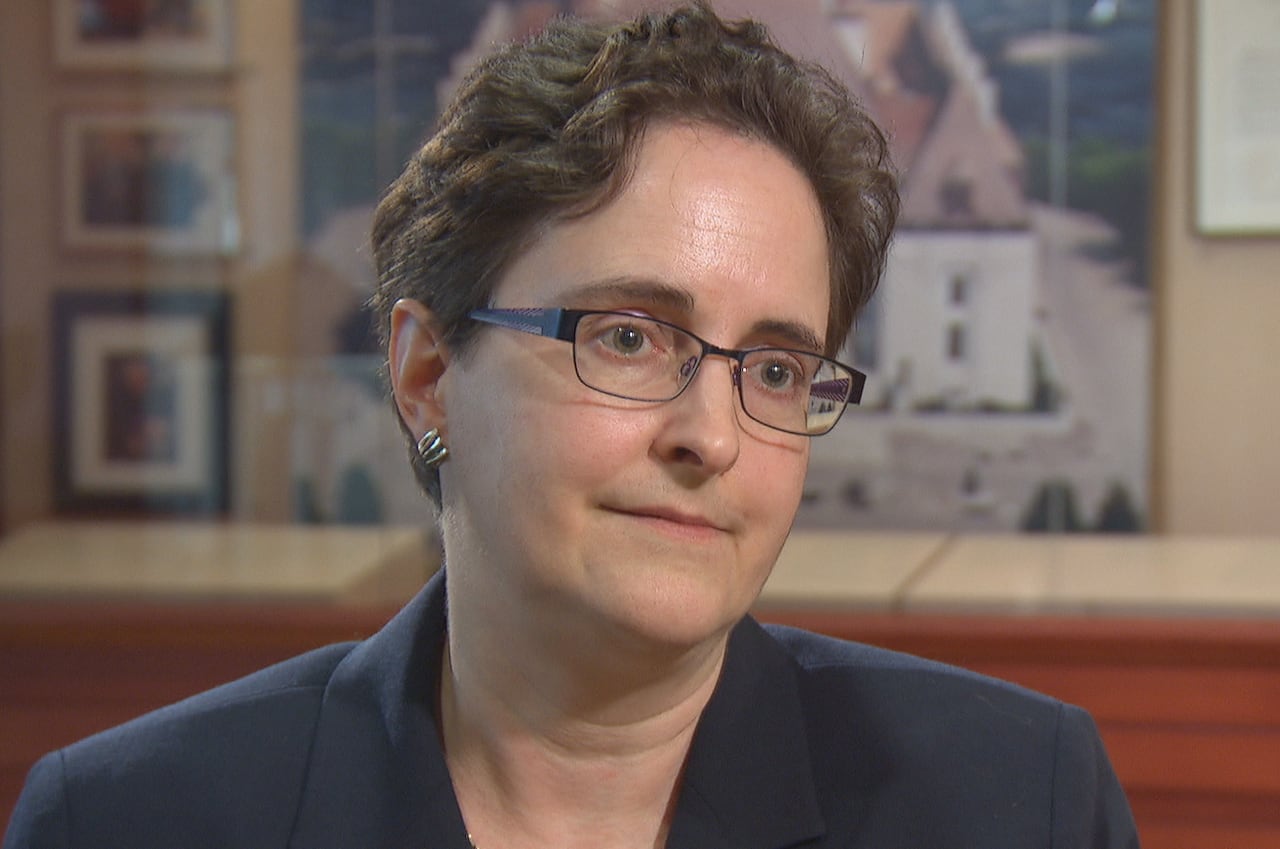
Teresa Scassa, the Canada Research Chair in Information Law at the University of Ottawa, states that individuals must be more informed about how their data might be used or shared when their ID is scanned. (CBC)
The law also requires that any collection, use, or disclosure of personal data must be for a purpose that a reasonable person would deem appropriate under the circumstances.
Teresa Scassa, the Canada Research Chair in Information Law and Policy at the University of Ottawa, suggested that individuals should ask questions when they present their identification for scanning.
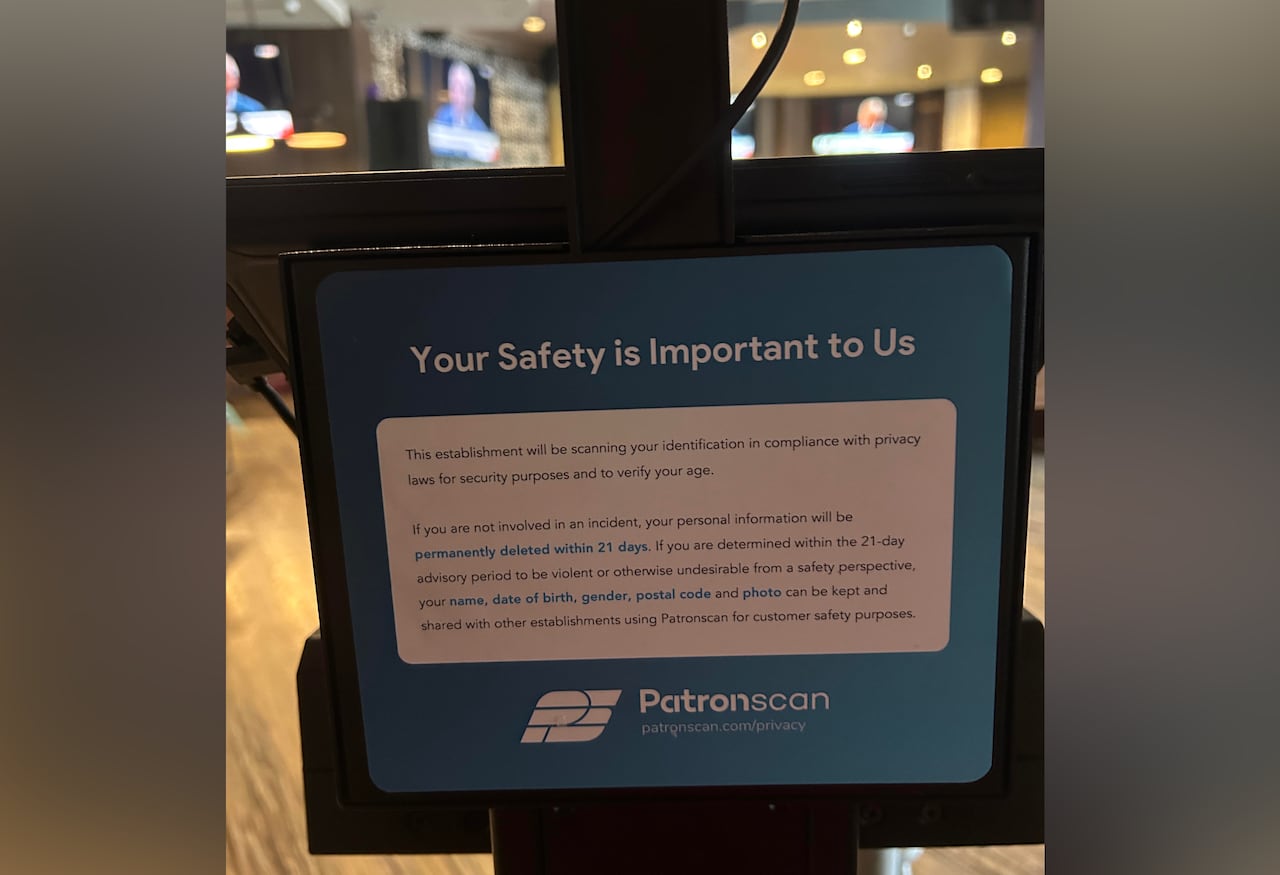
The sign under the Patronscan ID machine at the Riverside bar outlines how the personal information it collects will be utilized and shared. Alexandra received a photo of the sign from the bar’s management after she raised concerns about the public flag. (Submitted by Alexandra)
“Is the data collection necessary? Is it suitable for the circumstance? Does it overreach? How is the data handled? Is it secure? Who has access to it? These are all pertinent questions,” she noted.
A spokesperson for Patronscan stated in an email that when an ID is scanned, they gather the name, date of birth, gender, postal code, and expiry date to confirm a person’s age. If no incidents occur that night, the record is deleted within 21 days in Manitoba.
In the event of an incident, the spokesperson clarified, the venue may record a flag, and the information is retained for a longer period. For serious incidents, a network flag may be created, which is visible to other Patronscan venues only when an ID is scanned.
Public flags enhance safety: BarWatch chair states
In Vancouver, the BarWatch program has been operational for over ten years, with its 46 bars and clubs all utilizing Patronscan. It allows bars to prohibit entry to individuals identified as gang members or those considered dangerous or harassing others across the program.
BarWatch has established protocols for when a public flag is assigned and collaborates with Vancouver police, as explained by Curtis Robinson, the program chair and a former police officer.
-
Barwatch introduces lifetime bans for weapons infractions at Granville Street bars
-
Vancouver bars to dump unattended drinks after VPD warning
A strict code of conduct is posted that patrons must adhere to or face the risk of being banned through the system. British Columbia’s privacy commissioner approved the program in 2009, contingent on the agreement that information collected would be deleted within 24 hours if no incidents occurred.
“Individuals who are banned due to inappropriate behavior are taken seriously. You have essentially behaved unsafely, and you are informed that because of your actions, you are prohibited from entering here or any other BarWatch establishment,” Robinson explained.
He added that those who prefer not to have their ID scanned can opt for bars that do not utilize BarWatch.
‘Undesirable to whom?’
At the Riverside entrance, there is a Patronscan sign positioned below eye level, situated beneath the machine that scans identification. Alexandra mentioned that she overlooked the sign during her visit.
The sign indicates that if an individual is deemed violent or otherwise “undesirable” from a safety perspective, their name, date of birth, gender, postal code, and photo may be retained and shared with other Patronscan venues.
Scassa pointed out that the sign raises several issues regarding whether it provides adequate notice.
For example, she noted that it does not specify that particular incidents will be communicated to other venues. In Alexandra’s situation, the Calgary Stampede venue was able to access information about her incident in the men’s restroom at the Winnipeg bar.
Scassa also mentioned that it does not clarify that the data is retained by a third party, nor does it indicate how many venues the information can be shared with or the geographic range of those establishments.
Krystle Shore, an adjunct assistant professor at the University of Waterloo, studies the intersection of surveillance technologies and social issues. She remarked that these notifications rely on individuals stopping to read the fine print and comprehending its meaning.
“We enter into ambiguous territory when we examine a sign located at a bar, positioned below a stand where someone might not be directly looking as they enter with a group of friends on a busy night,” Shore noted.

Krystle Shore, a privacy expert studying surveillance, states that the process leading to someone’s data being shared is subjective and can have significant consequences. (Aastha Shetty/CBC)
She highlighted that the Patronscan disclosure sign has various troubling aspects, particularly the term undesirable.
“What does undesirable mean? Undesirable to whom? And in what context?” Shore questioned.
The system is based on the subjectivity of an individual and can result in serious repercussions, she added.
“When we consider the surveillance of ‘undesirables,’ there’s a historical context regarding who has been labeled as such,” Shore noted, mentioning that members of the 2SLGBTQ+ community have often been categorized as “undesirables.”
Bars required to provide signage: Patronscan
The Patronscan representative stated that signage is obligatory for clients and has been updated as necessary following various privacy commission evaluations.
The company will initiate an investigation if someone contests a flag, the spokesperson added.
Alexandra is currently in the process of submitting a formal complaint to the Office of the Privacy Commissioner of Canada, which is responsible for ensuring compliance with privacy laws in Canada.
Ann Cavoukian, the former privacy commissioner of Ontario, described the situation as shocking and asserted that it warrants investigation by the commissioner.
“This individual was completely unaware that this was happening and that her information would be utilized in this way afterward,” she stated.
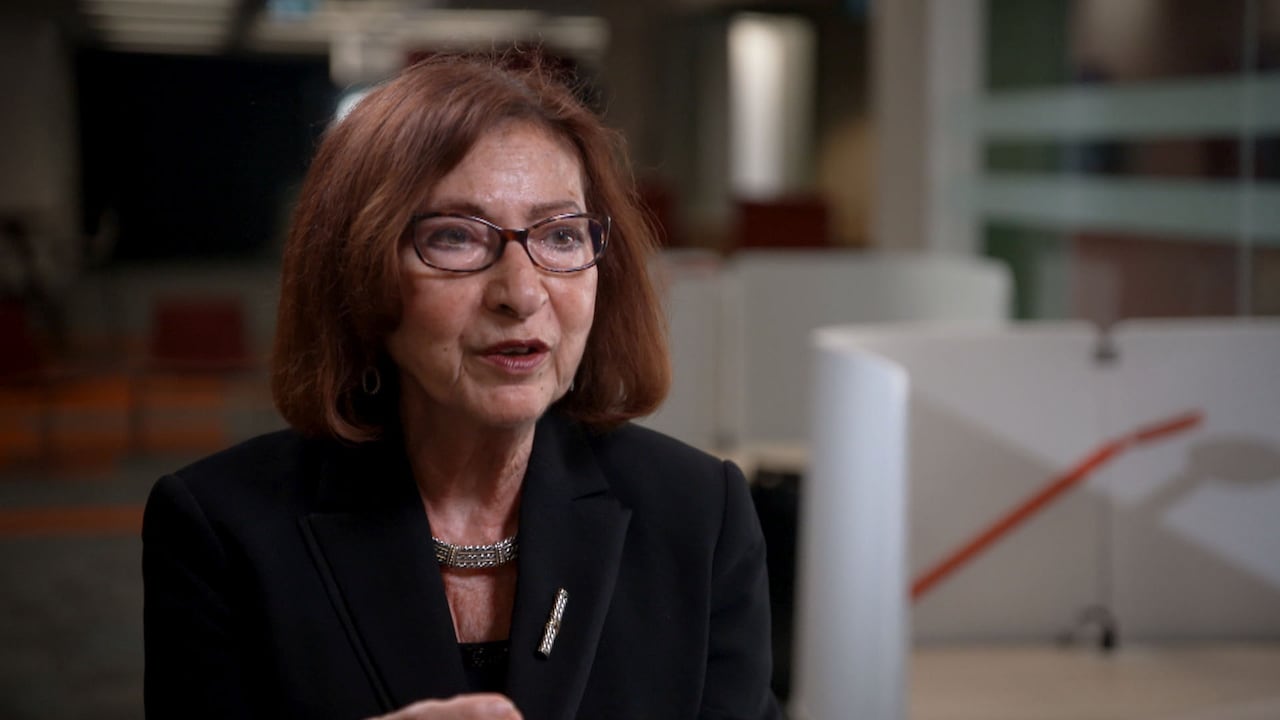
Former Ontario privacy commissioner Ann Cavoukian believes the federal commissioner should examine the incident, which she described as appalling. (CBC)
Alexandra expressed her intention to share her experience to raise awareness among Canadians regarding how their data may be collected and shared by third parties.
“In a world where mass surveillance and AI are increasingly prevalent, I believe it is crucial for someone to speak out when they recognize that their rights are being infringed,” she stated.

