

The Conservative Party is calling on Prime Minister Mark Carney’s administration to disclose “the complete details” of the proposed trade agreement between Canada and the U.S. that was under discussion before talks broke down late Friday.
Shuvaloy Majumdar, Conservative MP and the party’s shadow minister for Canada-U.S. relations, expressed in a letter to Trade Minister Dominic LeBlanc on Sunday that the Conservatives are not requesting “negotiating secrets.”
However, Majumdar emphasized that the party is looking for information that both Ottawa and Washington are already aware of. “This information will enable Canadians to engage in a discussion about the future direction of our nation,” he stated.
Following the collapse of prolonged trade negotiations, the United States implemented tariffs of 50% on approximately $28 billion worth of Canadian products starting early Saturday.
-
Listen
The fallout from failed Canada-U.S. trade talks
-
Trump says Canada ‘wants the benefits’ of being a U.S. state ‘without being one’ as trade dispute deepens
On Saturday, Prime Minister Mark Carney informed reporters that Canadian negotiators opted to exit the discussions due to what he characterized as unacceptable demands from the United States.
These demands included “efforts to limit our capacity to engage in other trade agreements,” Carney commented.
He stated, “We were unwilling to compromise Canada’s sovereignty or jeopardize our vital industries,” and added that his government would introduce “dollar-for-dollar” tariffs on American products starting September 8.
U.S. Trade Representative Jamieson Greer indicated that the discussions failed because of “new demands and retractions of previous commitments by Canada.”
He explained that the U.S. “proposal would have facilitated supply chain coordination in aerospace, complementary measures to tackle unfair trade practices, cooperation on critical minerals, enhanced enforcement against imports produced with forced labor, and the initiation of formal U.S.-Mexico-Canada Agreement negotiations,” in a statement released early Saturday.
Greer also revealed to the New York Times during an interview on Saturday that President Donald Trump’s administration had, in part, proposed reducing tariffs on softwood lumber by 10 percent and cutting steel tariffs from 50 percent to 25 percent.

Specific details not yet disclosed
However, neither government has made public the specific terms of the agreement that was being discussed.
Despite this lack of detail, it seems that Carney’s choice to withdraw from the negotiations has received broad support across Canada, including from provincial leaders like Ontario Premier Doug Ford and B.C. Premier David Eby.
Many have also endorsed Carney’s strategy to impose reciprocal tariffs on the U.S. next month.
There is a sense of “concern” among Canadians regarding the implications of the escalating trade conflict for the economy and their everyday lives, according to David Coletto, founder and CEO of Abacus Data polling firm.
However, there is also a prevailing sentiment that “we’re not going to allow Donald Trump to intimidate us,” Coletto mentioned in an interview with CBC News on Sunday. “I believe most Canadians still appreciate what the prime minister conveyed yesterday and are now anticipating the next steps.”
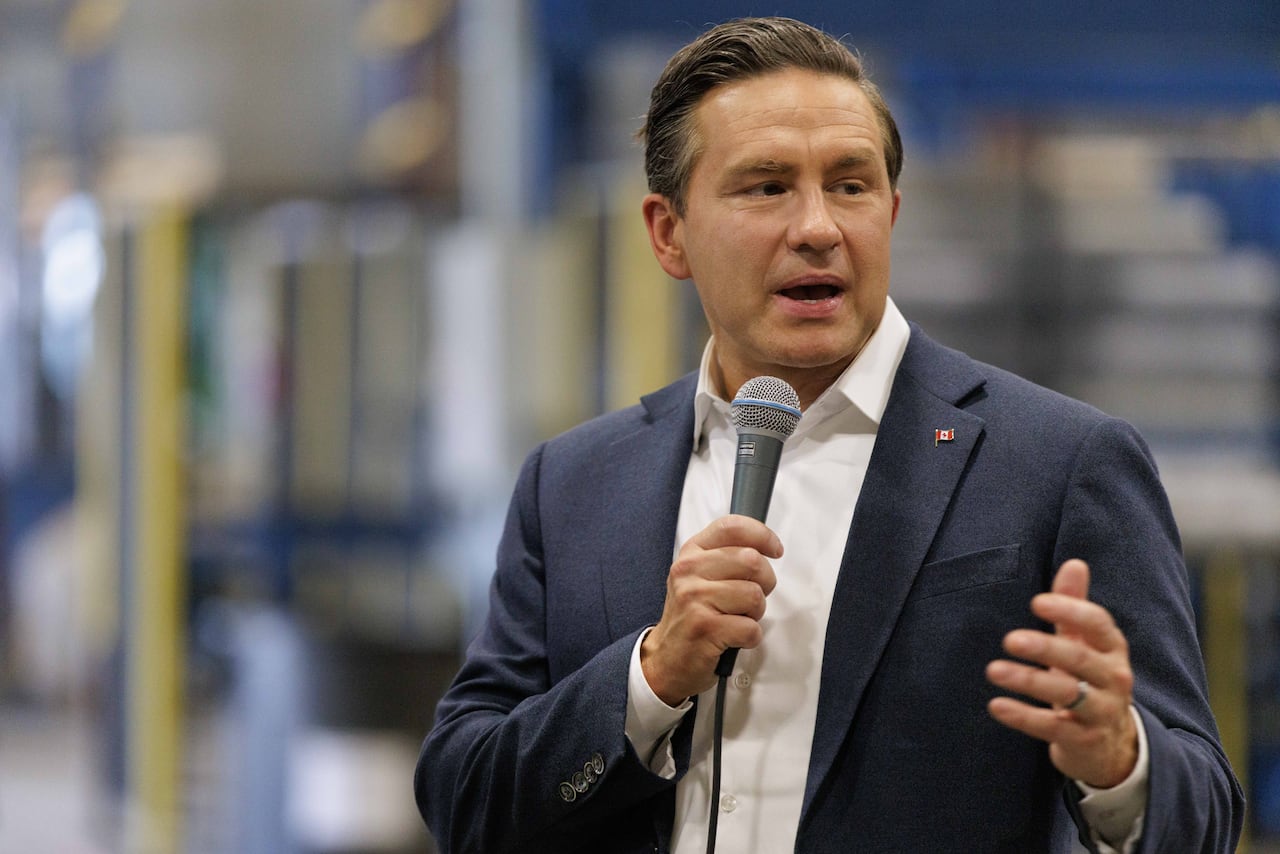
After the breakdown of Canada-U.S. trade negotiations, Conservative Party leader Pierre Poilievre stated that Canada ‘cannot accept one-sided tariffs that will deindustrialize our country’ nor ‘a poor agreement.’ (Christopher Drost/The Canadian Press)
Leaders of opposition parties have also asserted that Canada should stand united against Trump’s tariffs.
“Canada cannot permit one-sided tariffs that will deindustrialize our nation. We also cannot agree to a poor deal. Rather, we must persist in the pursuit of tariff-free trade,” Conservative Party Leader Pierre Poilievre remarked in a social media update on Saturday morning.
Poilievre indicated that he would request a call with Carney “to explore what actions we can take to advocate for our workers, businesses, and economy.”
When asked by reporters on Saturday if he would inform opposition leaders about the trade situation, Carney stated that such discussions would likely occur Monday afternoon or Tuesday morning.
