
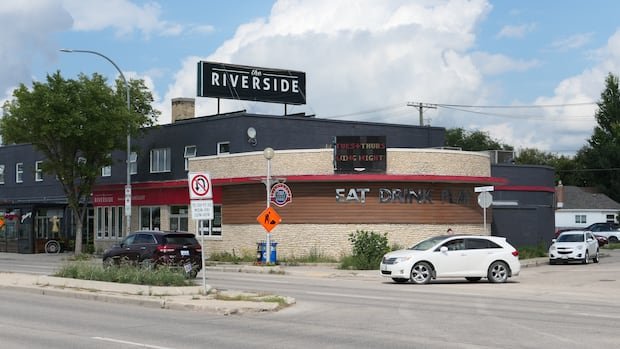
Privacy experts have expressed concerns following an incident where a woman was flagged as a national public safety risk by an ID scanning system at a Winnipeg bar, resulting in her being denied entry to a Calgary Stampede venue in July. The individual, identified only as Alexandra, visited the Riverside bar in St. Vital on June 6, where a staff member scanned her driver’s license using a Patronscan ID scanner without providing an explanation for the process. Unaware of the implications, Alexandra later discovered that an incident at the bar led to a flag being raised against her, potentially affecting her access to bars nationwide.
After feeling unwell at the Winnipeg bar and being asked to leave while in the restroom, Alexandra was shocked to find out that the same flag prevented her entry to a Calgary Stampede venue on July 9. Despite clarifying the false claim of a criminal record, she was denied access on subsequent attempts, prompting her to investigate the issue further. It was revealed that the flag labeled her as a “public safety concern” due to an incident where she entered the men’s restroom at the Riverside bar and refused to leave.
Upon discovering that the Winnipeg bar participates in Patronscan’s flag network, Alexandra learned that the system shares information about problematic individuals among venues to enhance safety measures. The bar acknowledged the error after Alexandra raised concerns, confirming that the flag should have been internal only. Subsequently, the external flag was removed from her file.
Experts highlighted the necessity for individuals to understand how their personal data is utilized when scanned at establishments, emphasizing the importance of transparent communication regarding data collection purposes. Teresa Scassa, a Canada Research Chair in Information Law at the University of Ottawa, emphasized the need for individuals to question the necessity and appropriateness of data collection during ID scanning processes.
The incident also shed light on the BarWatch program in Vancouver, which employs Patronscan to enhance security in its bars and clubs. Curtis Robinson, the program’s chair, noted the strict code of conduct implemented to prevent incidents and emphasized the significance of public flags in maintaining a safe environment. The program collaborates with law enforcement to address safety concerns and bans individuals exhibiting unsafe behavior.
While the Patronscan system aims to enhance safety by sharing information among venues, concerns were raised about the clarity of signage and the potential consequences of subjective data sharing. Krystle Shore, a privacy expert, highlighted the need for individuals to be aware of how their data is used and shared by third parties, underscoring the importance of informed consent in data collection practices.
As Alexandra pursues an official complaint with the Office of the Privacy Commissioner of Canada, privacy advocates stress the significance of protecting individuals’ rights in the face of increasing surveillance and data sharing practices. Former Ontario privacy commissioner Ann Cavoukian deemed the incident alarming and called for an investigation to ensure compliance with privacy laws and safeguard individuals’ privacy rights.

