
The forthcoming provincial election campaign is set to commence this week, with Thursday, August 27th, likely marking the official start. While the campaign has not yet launched, the five primary political parties have been actively engaging in election-related activities for a considerable period.
As the election is slated for October 5, Quebecers will, for the first time since 2018, elect a new government without François Legault at the helm. Legault, who secured consecutive majority governments in 2018 and 2022, resigned earlier this year. Christine Fréchette assumed the role of premier in April following her victory in the party’s leadership contest.
Current polls indicate a closely contested race for the premiership. According to an August 11 Léger poll conducted for the Journal de Montréal and TVA, 48% of voters have made their decision, while 49% remain undecided. Speculation abounds regarding the potential outcome of a minority government, a scenario not witnessed since the 2012 administration led by Pauline Marois.
It is noteworthy that this year’s election includes 127 ridings, an increase from the previous 125, thereby raising the majority seat threshold to 64 seats.
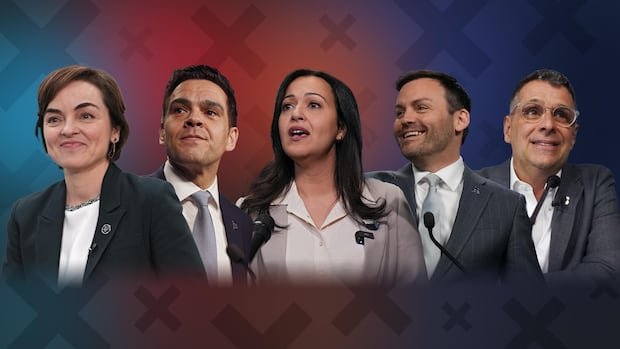
The main party leaders contesting in the election are Christine Fréchette (Coalition Avenir Québec), Ruba Ghazal (Québec Solidaire), Charles Milliard (Quebec Liberal Party), Éric Duhaime (Conservative Party of Quebec), and Paul St-Pierre Plamondon (Parti Québécois).
Each party leader is running in specific ridings, with Fréchette opting to contest in Trois-Rivières, St-Pierre Plamondon in Camille-Laurin, Milliard in Orford, Duhaime in Bellechasse, and Ghazal seeking reelection in Montreal’s Mercier riding.
The campaign issues at the forefront, as per the recent Léger poll, are health and social services, cost of living, housing, and the economy. The Parti Québécois, despite leading in current polls, faces scrutiny over its referendum plans, particularly after delaying the referendum until the end of U.S. President Donald Trump’s term in 2029. The recent U.S.-Canada trade tensions are also expected to feature prominently in the election discourse.

